- Home
- Middle East News
- About USA Weekly News
- World News
- INLNews News Headlines
- Benjamin Netanyahu Israel
- US Politics
- UK Ireland News
- Saleh al-Arour killed
- Israel Genocide ICJ Case
- Israel Mossad Hamas Cash
- INLTVNews VideosP1
- Netanyahu RothschildCrime
- Pippin Drysdale Artist
- Wayne Hastings CarewReid
- Lloyd Carew-Reid Music
- Adam Carew-Reid Business
- Hidden Tribes In the USA
- Trump Shooting Analysis
- Irish Crime Exposed
- IRB of Ireland
Irish Republican Brotherhood IRB History
Irish Republican Brotherhood History
Irish Republican Brotherhood
Exciting Irish Republican Brotherhood News
Exclusive to the INL News Media Group
INL News Media Group UK Ireland News
Click here to find out more about the history of the Irish Republican Brotherhood

The Irish Republican Brotherhood Movement is gaining large numbers of members and supporters
Click here to find out more about the aims of The Irish Republican Brotherhood Movement
The IRB Irish Republican Brotherhood goes International with
the IRB Irish Republican Brotherhood's new look websites
www.irishrepublicanbrotherhood.net. and
www.irishRepublicanBrotherhood.com
Official IRB Email; info@irishrepublicanbrotherhood.com
Official IRB Email: info@irishrepublicanbrotherhood.com
Click Here To Find Out How The US Magically Creates Money
https://inltv.biz/usamoney-creationhistory
https://inltv.net/index.php/uk
https://www.inltv.biz/epsteins-secret-ai
Click Here For The Best Deals On Amazon

GMAIL LogIn Link Best Free Email Available
Google Search Link Twitter X LogIn Facebook
YahooMail LogIn Link EuroNews Link
INL News Media World Wide Email LogIn Link
GoDaddy Secure Account Log In Link
New York Times World News LogIn Link
INL News Media Group Sponsored Website LogIn Link
AOLMAIL LogIn Link RTE Player LonIn
Irish Republican Brotherhood
Honouring the past ... Shaping the future.. Join the Irish Republican Brotherhood in pursuit of Freedom for all Irish People living in Ireland or who may return to Ireland after as result of the many adversities they had to face living in Ireand that gave then no choice at the time to sail away to distant shores.. so they can return to an Ireland that is completely free from outside control. An Irish run by the Irish People for the Irish People..
Irish Republican Brotherhood
Honouring the past ... Shaping the future.. Join the Irish Republican Brotherhood in pursuit of Freedom for all Irish People living in Ireland or who may return to Ireland after as result of the many adversities they had to face living in Ireand that gave then no choice at the time to sail away to distant shores.. so they can return to an Ireland that is completely free from outside control. An Irish run by the Irish People for the Irish People..

Pippin Drysdale (nee Carew-Reid Famous Australian Clay Artist
https://usaweekly.com.au/pippin-drysdale-artist
supports the aims of
the IRB The Irish Republicam Brotherhood
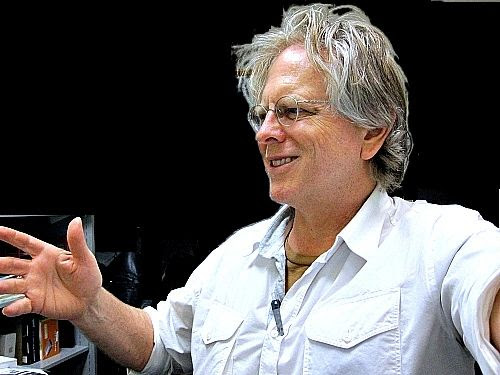
Lloyd Carew-Reid Australian Musician in New York is a suporter of the aims of the IRB Irish Republican Brotherhood Movement
Lloyd Carew-Reid who is a classical guitarist living in New York City,
who once played a cat-and-mouse game with Manhattan cops to fight
for the rights for buskers to make music in the New York Subways. now continues to campaign average American's constitutional rights...
"This is America!" was his thought.

Wayne Hastings Carew-Reid Perth Western Australian Multi Millionaire
Perth Western Australian Businessman lends his support to the IRB the Irish Republocan Brotherhood

Wayne Hastings Carew-Reid Perth W.A. multi milliomaire And His Perth Splicotor Wife Anne Marie Carew-Reid suppprt the aims of the Irish Republicsn Movement in helping to bring about a truly free Ireland for the Irish People

Adam Carew-Reid the Pest West Westerm Australian State Manager lends his support to the Irish Republican Movement. Adam Carew-Reid is the son of multi millionaire Perth Successful Businessman Wayne Hastings Carew-Reid and his Perth W.A. solicitotor Anne Marie Carew-Reid
The INL News Media Group is proud to be involved in informing the world about the Miriam Moriarty Owens Book
'Shh! 'Don't Tell' which is a true story about survival ,
,"Hidden away by a mother's Love... To the protective torture of the clergy glove ....
sentenced to a life of Hell... Before life began, the hammer fell ..."
Miriam Moriarty Owens was born in Tralee, County Kerry, Ireland..
"This story in one of survival, and a true depiction if how one small woman,
who was physically and mentally abused from early childhood right up to her early 40's,
overcome all obstacles that stood in her path,
and became a better brighter person..."
Anyone interested in purchasing a copy of 'Shh! 'Don't Tell'
please email: Sales@inltv.net
Irish Republican Brotherhood
Introduction letter from Tomas O’Riain the President fo the Irish Brotherhood IRB
All of those IRB inspired movements resulted in the 1916 Rebellion and its aims so wonderfully expressed in the 1916 Proclamation. This was followed by the 1918 general election and the establishment of Dáil Éireann a parliament for all Ireland and by the War of Independence. The British couldn’t win so they sued for a truce which in turn led to representatives of Dáil Éireann engaging in ‘settlement’ talks with the British Government.
The final outcome was a British enforced settlement under Lloyd George Britain’s PM’s threat of waging ‘Immediate and terrible war’ on the Irish people.
An imposed divided country was the result with a six county apartheid British Statelet in the north and a Twenty-Six County British Dominion “Free State” in the south with a British created parliament and a British imposed constitution.
This led to a civil war which was really a British inspired counter revolution with British money, guns and even the ship that bombarded Dublin in 1916. They defeated the republicans and left us with what we have today, two failed corrupt disintegrating states.
Today’s Twenty-Six County state is rapidly choking in its own corruption and mismanagement. The Leinster House politicians capitulated to the demands of the corrupt bankers and bailed out their failed gambling orgy with the people’s money and resources.
The British created CORRUPT judicial system, at the behest of the thieving banks is busy destroying the fabric of Irish society by unlawfully ejecting people from their homes in their tens of thousands.
The parasitic politicians do nothing but pass more and more repressive legislation to wring every last hard earned penny out of the people’s pockets. They exercise power without responsibility. That cannot be allowed to continue. It breeds oppressive totalitarian corruption.
The resurgent IRB must unite the people into a peaceful but powerful mass movement and reclaim the country north and south from the corrupt onslaught of bankers, politicians, the judiciary and their supporting medias spin and propaganda merchants.
We must build the IRB into a powerful united people’s movement to turn the tide and reclaim Ireland for this and the future generations of her noble and ancient people. The GAA has a million members and so can we.
In response to this great need the Irish Republican Brotherhood is reorganising and opening new branches or Circles throughout Ireland and amongst the Irish Diaspora. Membership is open to all Irish people over the age of 16.
Tomas O’Riain IRB President
Éireann go Brách - Ireland Forever.

Mr Wijat and His Team Fighting for Truth ,Justice, the Irish Way and For A True Independent Irish Republic
A short message from Mr Wijat.
.".. I look forward to seeing you reading my favourite Irish Newspaper
The Irish People
JUST Remember . ....
You Can Play With A Wijat .....
You Can Dance With A Wijat ......
But You Can't Stand On A Wijat's Toes !!! "
Mr Wijat's and His Team's Investigation into what Irish Politicians Earn Each Year
As of the latest official public sector pay adjustments effective 1st June 2026, most Irish politicians receive a basic salary of around 119,467 euros per year, that scales upwards depending on their specific office and parliamentary duties. Irish politicians are paid as public servants, meaning their yearly salaries rise concurrently with broader public service pay deals.
Political pay consists of a flat-rate basic salary, supplemented by additional salaried allowances for specific government or leadership roles
Taoiseach (Irish Prime Minister) recieces a basic parliamentary salary of 119,467 plus an office allowance of 136,844
Michael Martin as at September 2026 is the Taoiseach of Ireland and earns a total of 256,311 euros per year plus many other benefits, lurks and perks.
With all the extra transport facilities,office running expenses, staff and extras provided for the office of the Irish Taoiseach of Ireland (the name used to describe the Irish Prime Minister) the estimated cost to the Irish People is estimated to be in excess of 500,000 Euros.
With all the extra transport, office running expenses, staff and extras provided to Irish Government Ministers the estimated cost to the Irish People to employ each Irish Government Minister is estimated to be I'm excess of 300,000 Euros.
The total estimated cost of the employment of all of the Elected TD's and full time Irish Public Servants in the Irish Government and Parliament is in excess of an estimated 50 million euros.
Most Irish Government Ministers earn been around 170,000 to 250,000 euros per year
Tanaiste (Irish Deputy Prime Minister) as at September 2026 is Simon Harris earns a basic yearly salary of 119,467 plus an office allowance of 116,960 which equates to total yearly salary 9f 236,427 euros per year
Ceann Comhairle (Irish Dail Speaker),receives a basic salary of 119,467 euros plus an office allowance of 149,055 which equates to 268,522 yearly salary
All Irish State Cabinet
Ministers receive a basic salary of 119,467 euros per year plus an office allowance of 96,699 euros per year which equates to a total yearly salary of 217,136 euros per year.
Minister for Foreign Affairs, Trade and Defence of Ireland as at September 2026 is Helen McEntee who recieces a basic salary of around 119,467 plus an office allowance of around 97,668 euros per year which equates to a total yearly salary of 217,136 euros per year salary
Ministers of the Irish State *Attending Cabinet Meetings) receive a basic salary of 119,467 plus an office allowance of 62,106 euros which equates to a total yearly salary of 181,573 euros per year
An Irish Backbencher in the Irish Parliament receives a basic yearly salary of 119,467 euros and no yearly office allowance
Senior Irish Cabinet Ministers as at September 2026 who earn at total of 217,136 euros per year salary include:
Helen McEntee Irish Minister for Foreign Affairs, Trade and Defence
Jim O'Callaghan Irish Minister for Justice, Home Affairs and Migration
James Lawless Irish Minister for Further Education, Research and Science
Hildegarde Naughton Irish Minister for Education and Youth
Martin Heydon Irish Minister for Agriculture, Food, Fisheries and the Marine
James Browne Irish Minister for Housing, Local Government and Heritage
Peter Burke Irish Minister for Enterprise, Tourism and Employment
Dara Calleary Irish Minister for Social Protection, RuralandCommunity
Norma Foley Irish Minister for Children, Disability and Equality
Darragh O'Brien Irish Minister for Climate, Energy,Environment and Transport
Jack Chambers Irish Minister for Public Expediture, Infrastructure and Digitalisation
Irish Ministers of State Attending Caninet ("SuperJuniors"), who are SpecialMinistersof State who regularly attend full Cabinet Meeting, because of their extra responsibilitiesall earna total yearly salary of 181,573 euros per year include:
Mary Butler, the IrishGovernment Chief Whip & Mental Health
Emer Higgins Irish Government Special Minister in charge of Disability
Noel Grealish Irish Special Minister for Food Production and New Markets
Sean Csnney Irish Special Minister for International and Road Transport and Logistics
Junior Irish Ministers of State as at September 2026who overseas Sub-portfolios but do not regularly sit at the cabinet meetings Table who receive a total yearly salary 267,759 euros per year include:
Thomas Byrne The Irish European Affairs and Defence Junior Minister
Michael Moynihan Special Irish Junior Minister for Special Education and Inclusion
Charlie McConalogue Irish Special Junior Minister for Sport and Postal Policy
Kevin "Boxer" Moran Irish Special Junior Minister for Public Works
Jennifer Murname O'Connoe Irish Special Junior Minister for Public Health, Well Being and Drugs
Neil Richmond Irish Special Junior Minister for International Development and Diaspora
Jerry Buttimer Irish Special Junior Minister for Charities,;Gaeltacht and Rural Transport
John Cummins Irish Special Junior Minister for Local Government and Planning
Christopher O'Sullivan Irish Special Junior Minister is a sub portfolio role
Robert Troy Irish Junior Minister in a sub portfolio role
Nial Collins Irish Special Junior Minister in a sub portfolio role
Niamh Smyth Irish Special Junior Minister in a sub portfolio role
Alan Dillon Irish Special Junior Minister in a sub portfolio role of Employment, Small Business and Retail
Timmy Dooley Irish Special Junior Minister in a sub portfolio role
Colm Brophy Irish SpecialJunior Minister for Migration.
Marian Harkin Irish Special Junior Minister in a sub portfolio role
Frank Feighan Irish Special Junior Minister for Public Procurement, Digitalisation and eGovernment
, Mr Wijat and His Team Fighting For Truth Justice and the Irish Way asks ...
"Why Does The EU Controlled Irish Government Descriminate Against The Irish People By Charging A Property Death Tax On Family Members Inherenting A Property In a Family Members Will, which in many instances forcing the family member who inherited a property to have to sell the inherited property?"
IRBThe Irish Republican Brotherhood Founded in 1858A Fenian historyIrish history editorial contactirishhistory@inltv.net

The Fenian movement · 1858–1924
Ireland's Honour and Independence
An oath-bound brotherhood founded in Dublin and New York in 1858, dedicated to the establishment of an independent Irish republic by physical force.
Explore the timelineWhat was the IRB?Scroll to explore
1858
Founded
Dublin & New York
1867
The Fenian Rising
Insurrection in Ireland
1916
The Easter Rising
Dublin, April
1924
Dissolved
The IRB wound up
Dates are the conventional ones used in the standard literature; some are disputed among historians.
Irish history editorial contact·irishhistory@inltv.net
Corrections, source submissions and research enquiries.
What was the IRB?
An oath-bound secret society, built to end British rule in Ireland
Found on St Patrick's Day 1858 by James Stephens in Dublin and, later that year, by John O'Mahony in New York, the Irish Republican Brotherhood was one half of a transatlantic movement: the IRB in Ireland and Britain, and the Fenian Brotherhood in the United States.
Dates, definitions and interpretations of the Brotherhood can be disputed among historians; this overview follows the scholarly literature and cites its sources below.
The two bodies answered to different names but shared a purpose and, in their early years, a leadership. Their declared object was the establishment of an independent Irish republic, to be achieved by physical force. In the 1860s that objective set them apart from every other strand of Irish nationalism: not land reform, not the repeal of a union, not a home parliament within the empire, but a republic, claimed and if necessary taken.
Members were sworn in and bound to secrecy, organised in small self-contained groups, and answerable to a central committee. That structure made the movement durable and almost impossible to measure — from outside, and often from inside — and it has left historians with an organisation whose size, discipline and internal politics remain genuinely disputed.
The IRB's motto was Ireland's honour and independence. Its American wing raised money, arms and men for Ireland; from the 1870s, the Clan na Gael became the principal American body in that role. Money, however, moved faster than either goodwill or command, and the transatlantic relationship was as often a source of friction as of strength.
 Records of a secret society. The IRB kept few papers, so much of what is known of it survives in police files, press reports and the memoirs of participants.
Because the organisation published little and kept few records, its own history rests heavily on the testimony of men who wanted to be remembered well — and on the testimony of informers who wanted to be paid.
The Fenian name
Stephens and O’Mahony took the word from Fianna, the legendary warrior band of early Irish story. It supplied both a name — Fenian, Fenianism — and a claim about continuity with an older Ireland.
The oath
Members swore allegiance to an Irish republic and to the organisation’s discipline. The oath, rather than any published programme, bound the society together and made it, in law, a conspiracy.
The circles
The IRB was organised in self-contained cells, usually called circles. Members of one circle were not supposed to know the membership of another, so a single arrest could not unravel the whole body.
The Supreme Council
A small central directory, the Supreme Council, sat above the circles and claimed authority over the organisation at home and abroad. Its secrecy also made it prone to faction and to disputes over money and command.
Why it was secret — and why it mattered
The IRB operated in a country policed by a large armed constabulary, informer networks and a resident magistrate system. An open separatist society could be watched, infiltrated and prosecuted. Secrecy was a practical condition of existence, not only a romantic device.
It also exacted a price. Because the organisation kept few papers and published little, its own history survives mainly through police files, trials, newspapers hostile or sympathetic to it, and the memoirs of participants written decades later. Historians have therefore argued about the size, the discipline and even the degree of central control of the movement at almost every stage of its existence.
Secrecy gave the movement reach that parliamentary politics did not have: an oath taken in a back room in Dublin could be matched by an oath taken in New York. That transatlantic duplication was the IRB’s defining feature and its most persistent source of friction.

1858–1924 · A movement in the shadows
Its declared object was the establishment of an independent Irish republic, to be won by force of arms. Everything else — the cells, the oaths, a movement divided by an ocean and repeatedly betrayed from within — followed from that decision.
A statement of the movement's own objective, not an endorsement of it
Chronology
Sixty-six years, 1848 to 1924
From the wreck of the Young Ireland rising to the dissolution of the Brotherhood in the Irish Free State. The dates are the conventional ones used in the standard literature.
 Planning and paper. Membership estimates from the 1860s survive almost entirely in police and government files.
1848
Young Ireland collapses
The Young Ireland rising of 1848 ends in a scattered skirmish and the scattering of its veterans — to America, to Australia, to prison. Those exiles seed the next generation of separatists.
1858
Founded in Dublin and New York
On St Patrick’s Day, James Stephens founds the Irish Republican Brotherhood in Dublin. Later the same year, John O’Mahony founds the Fenian Brotherhood in New York. Twin organisations on either side of the Atlantic.
1863–65
The movement grows
The Fenian Brotherhood expands rapidly among Irish Americans, many of them veterans of the American Civil War. Recruiters travel to Ireland and to Britain; membership estimates rise sharply, though the figures come largely from police reports.
1865
The British crackdown
The IRB newspaper The Irish People is seized and suppressed in Dublin. Stephens, Jeremiah O’Donovan Rossa and others are arrested. The movement is decapitated at its centre but survives in the circles.
1867
The Fenian Rising
A promised mass insurrection in Ireland collapses into scattered, poorly armed local actions against far better equipped British forces. It fails militarily, and is remembered chiefly for the arrests and executions that followed.
1867
Manchester and the Manchester Martyrs
IRB men free two Fenian prisoners in Manchester; a police sergeant is killed in the struggle. Three men — William Allen, Michael Larkin and Michael O’Brien — are hanged for the killing. They become enduring Fenian martyrs.
1867
The Clerkenwell explosion
A bomb intended to blow open the wall of Clerkenwell prison in London kills civilian residents when the wall falls into the street. The deaths badly damage public sympathy for the movement in Britain.
1870s
The New Departure
Fenian ideas ally at times with agrarian struggle and the Land League, in a period usually called the New Departure. Separatists and constitutional nationalists cooperate over land without agreeing about the state.
1880s
The dynamite campaign
Fenian-linked attacks in Britain aim to force Irish concessions through fear. The campaign alienates much public opinion at home and abroad and accomplishes little politically.
1890s–1900s
A younger generation revives the IRB
New leaders such as Thomas Clarke and Seán Mac Diarmada rebuild the organisation among a younger generation, committed to an armed rising rather than to Home Rule. They work quietly inside Irish nationalist clubs and societies.
1915
The funeral of O’Donovan Rossa
The old Fenian Jeremiah O’Donovan Rossa dies in New York and is buried in Dublin. The funeral becomes a mass political event, and Patrick Pearse’s graveside oration is widely read afterwards as a turning point.
1913–16
The IRB and the Irish Volunteers
The IRB progressively takes control of the force raised as the Irish Volunteers, and a small Military Council inside the Supreme Council secretly plans an insurrection without informing the organisation as a whole.
1916
The Easter Rising
The Military Council’s rebellion is suppressed within a week. The executions that follow transform Irish opinion. The rising’s meaning comes from what happened after it, not from its military outcome.
1919–21
The Irish War of Independence
Veterans of the IRB and of 1916 lead the guerrilla campaign against British forces, coordinated from Dublin through an underground administration and a parallel court system.
1919–22
Treaty and Civil War
The Anglo-Irish Treaty splits Ireland, and former Fenians take opposite sides in the Irish Civil War. Men who had shared an oath fought each other in the Free State’s first years.
1924
The IRB is wound up
The organisation is formally dissolved, its purpose judged fulfilled by the Irish Free State. Its members disperse into the new state’s politics, administration and army.
A note on method: dates, definitions and interpretations in this chronology can be disputed among historians. The founding date, the movement's size in the 1860s, the degree of central control after 1866, the character of the 1916 leadership, and even the boundaries of the term 'Fenian' are all matters on which scholarly accounts differ. This page reflects a scholarly overview and follows the cautious reading of the standard literature rather than any single account; the works it draws on are cited under 'Sources & further reading'.
Where the record is contested — the size of the movement in the 1860s, the degree of central control after 1866, the number of those involved in the planning of 1916 — this timeline follows the cautious reading rather than the dramatic one.
A note on the endpoint: the Brotherhood’s formal dissolution in 1924 — when its Supreme Council dissolved and its remaining organisation passed into the army council structure from which the IRA descended — is the established endpoint in the historical literature. From the 1920s onward, various later and present-day groups have claimed to continue or inherit the IRB’s name and tradition; these are separate organisations, and the historical record does not treat them as the same body. See the section 'The IRB name after 1924' below, and the Sources list, for context and further reading.
The Fenian tradition in America
A movement that needed two countries to exist
The Irish Republican Brotherhood was never only an Irish organisation. From 1858 the movement lived on both sides of the Atlantic, and the American half supplied most of what it had: money, weapons and men who had already fought.
Famine emigration had planted a large, organised and increasingly confident Irish population in American cities. When the Civil War ended in 1865, tens of thousands of Irish-American veterans came home with military experience and no immediate use for it. Fenian recruiters met them with a cause. Estimates of Fenian Brotherhood membership in America in the mid-1860s run into the tens of thousands, though the figures are those reported by the movement's own organisers and by hostile newspapers, and should be read cautiously.
Money and arms were raised in the United States and shipped — or attempted — across the Atlantic, and American veterans travelled to Ireland to train circles there. The more important export was hope: the sense in Dublin and in the Irish countryside that a rising would be backed by American money and, eventually, by American power.
That hope was repeatedly disappointed. The raids into Canada between 1866 and 1871 were an attempt to strike at Britain through its North American colonies and to force the United States to take up the Irish question; they failed on both counts and left the movement more divided than before.
 Emigration and return. The shipping lanes between Queenstown, Liverpool and New York carried the movement's members, its money and its newspapers.
1866
Fenian raids across the Niagara frontier
American Fenian veterans crossed into Canada in the weeks after the Civil War ended, expecting an easy position north of the border and British attention on Ireland. They were pushed back by Canadian and British forces and by United States pressure.
1870–71
Further raids into Canada
Smaller expeditions in 1870 and 1871 met the same fate. The raids damaged relations with the United States government, divided Irish-American opinion and did nothing for Ireland. They mark the moment when the movement’s American wing had to choose between insurrection abroad and respectable politics at home.
1870s
Clan na Gael becomes the main American body
Formed in New York in 1867 and led from the 1870s by John Devoy, Clan na Gael became the movement’s principal source of American money and arms, in a long and often strained partnership with the IRB at home.
Irish-America was not a single political bloc. Church, Democratic Party machines, trade unions and respectable opinion all pulled against insurrection, and the Fenian movement had to compete for the same money and the same men. Its American history is as much a history of fundraising quarrels as of rifles.
Key figures
Seven people, six decades
Founders, organisers, prisoners and signatories. These notes describe what the historical record shows, including the parts that are unflattering.
JS
James Stephens
1825–1901
Founder and organiser, Dublin
A former Young Irelander and railway engineer, Stephens founded the IRB in Dublin in 1858 and built its cell structure, its oath and its transatlantic arrangements with O’Mahony. His control of the movement collapsed after his 1865 arrest and escape; he was deposed as head of the organisation in 1866 and spent his later life in exile and in writing.
JOM
John O’Mahony
1815–1877
Founder in America, scholar
A Gaelic scholar and translator of Irish literature, O’Mahony founded the Fenian Brotherhood in New York in 1858 as the American counterpart of the IRB. He presided over a body that raised money and arms for Ireland, and he was ousted from its leadership in 1865 as more militant factions took hold.
JODR
Jeremiah O’Donovan Rossa
1831–1915
Veteran, journalist, prisoner
Manager of The Irish People, O’Donovan Rossa was arrested in 1865 and sentenced to penal servitude; he was released in 1871 and went to America, where he remained a public and combative figure in Fenian politics. His death in New York in 1915 and burial in Dublin were organised by the IRB as a demonstration, and the funeral became one of the movement’s largest political occasions.
TC
Thomas Clarke
1858–1916
Old Fenian, 1916 rebel
Jailed as a young IRB man in 1883 and released in 1898, Clarke returned to Ireland in 1907 and rebuilt the organisation as its most senior figure in Dublin. He was the first signatory of the 1916 Proclamation and was executed at Kilmainham Gaol on 3 May 1916.
SMD
Seán Mac Diarmada
1883–1916
Organiser, signatory
A travelling organiser and manager of the newspaper Irish Freedom, Mac Diarmada recruited widely across the country in the years before 1916 and sat on the IRB Military Council. He was executed at Kilmainham Gaol on 12 May 1916.
PP
Patrick Pearse
1879–1916
Writer and leader of 1916
A teacher, writer and Irish-language advocate, Pearse came to separatism through the revival of Irish culture and joined the IRB shortly before 1916. He read the Proclamation outside the General Post Office and was executed at Kilmainham Gaol on 3 May 1916.
JC
James Connolly
1868–1916
Labour leader, co-leader of 1916
Born in Edinburgh to Irish parents, Connolly was a socialist organiser, founder of the Irish Labour Party and commander of the Irish Citizen Army. He was co-opted onto the Military Council in 1916 and, wounded, was executed at Kilmainham Gaol on 12 May 1916.
Dates follow the standard biographical reference works. Where a person's motives or character are disputed, this resource says so rather than settling the question.

Easter Week 1916 · The decisive act
A rising of six days, and of the sixty years after it
The Military Council of the IRB planned and led the rebellion of Easter 1916. It was militarily defeated within a week. What gave it lasting force was what the British government did next.
01
The plan
A Military Council of a handful of men inside the IRB’s Supreme Council planned the insurrection in secret, committing the organisation’s name without consulting it. Weapons were sought in Germany, and a rising was fixed for Easter week on the reasoning that a British war was Ireland’s opportunity.
02
The Proclamation
Printed in secret on Easter Sunday and read from the steps of the General Post Office on Easter Monday by Patrick Pearse, the Proclamation declared an Irish Republic and named the seven signatories of the Provisional Government. Fewer than a thousand copies are thought to have been produced on the day.
03
The city
Volunteers and the Irish Citizen Army occupied the General Post Office, the Four Courts, Jacob’s factory, Boland’s Mills and other strongpoints. Fighting, shelling and fires destroyed much of the centre of Dublin; civilian deaths were the largest single category of casualties.
04
The surrender
After six days, cut off and outgunned by British artillery and troops, Pearse issued the order to surrender on Saturday 29 April to prevent further civilian slaughter. Around 3,400 people were detained in the aftermath, and most were later released.
05
The executions
Between 3 and 12 May, fifteen of the leaders were shot in the Stonebreakers’ Yard at Kilmainham Gaol, including the seven signatories of the Proclamation. Roger Casement was hanged in London in August. The executions, and the secrecy of the courts-martial, turned public opinion sharply toward the rebels.
06
The aftermath
Execution, internment and the threat of conscription in 1918 changed a rising that had been condemned by much of the public into the founding event of the independent state. The military rising had failed; its political consequences succeeded.
The Rising is remembered for its consequences rather than its military course: for the executions at Kilmainham, for the internment camps, and for the way a week of street fighting in Dublin changed what a majority of Irish people would accept as a settlement.
This section describes armed action and its outcome because they are the historical record. It does not endorse the use of force, then or now.
Legacy, debate & interpretation
What the Brotherhood was worth is still argued over
Historians agree about much of the chronology and disagree, sometimes sharply, about its meaning. What follows sets out the arguments as arguments, with the strongest version of each.
Separatism against constitutionalism
One long-running argument sets the IRB against the parliamentary tradition of O’Connell, Butt, Parnell and Redmond. Constitutional nationalists argued that Ireland gained more through Westminster, land reform and party discipline than through conspiracy; separatists argued that parliamentary gains could always be repealed, and that only an Irish government in Dublin could be relied upon. Historians point out that the two traditions often fed on each other: land agitation created the mass mobilisation that separatists later used, and parliamentary crises repeatedly discredited the constitutional route for a section of nationalist opinion.
Did armed insurrection help or harm?
The record is genuinely mixed. The 1867 rising and the 1880s dynamite campaign achieved little and cost the movement public goodwill, especially after the killing of civilians in Manchester and at Clerkenwell. In 1916, by contrast, a militarily hopeless week produced a durable political transformation, largely because of the British response to it. Whether this argues for the wisdom of insurrection, or simply records that a failed rising can sometimes succeed politically, is a question on which historians do not agree — and one that tends to be answered with the benefit of hindsight.
How effective was the organisation?
The IRB was small, faction-ridden, often short of money and repeatedly penetrated by informers; it was defeated in the field in 1867 and did not govern Ireland after 1916. Its defenders emphasise its persistence: it kept an insurrectionary tradition alive for sixty years, supplied the personnel of the 1919–21 campaign, and was wound up in 1924 because its members believed its objective had been reached. Its critics note that its most consequential act, the 1916 Rising, was planned by a self-selected committee that ignored the organisation it claimed to lead.
The long shadow of 1916
The rising became a founding story for the Irish state and, later, a contested one. For much of the twentieth century it was officially commemorated as the origin of independence; from the 1960s onward the same events were read very differently by those who argued that the resort to violence in Ireland had its own costs. The way a state remembers a founding rebellion, and the way historians write about it, have seldom been the same thing. This resource describes the movement; it does not adjudicate the argument.
 Commemoration is itself a historical subject. How the movement has been remembered, by whom, and to what purpose, has changed more than once since 1924.
This page describes the arguments and does not choose between them. Readers who want a verdict will find several to choose from in the standard literature listed below.
Assessment of the Brotherhood remains contested among historians — over its effectiveness, its internal divisions, and the weight of its part in 1916; the positions outlined here reflect differing scholarly readings, with sources cited below.
Please read
An important distinction
This site is a historical and educational resource about the Irish Republican Brotherhood, an organisation that existed between 1858 and 1924 and was formally wound up in 1924.
It is not connected to, does not represent, and does not support any present-day organisation that uses the name of the Irish Republican Brotherhood, the Fenian Brotherhood, or the Fenian movement. Any such organisation is a separate and unrelated body, and nothing on this page should be read as describing, endorsing or speaking for it.
This site contains no membership, no sign-up, no recruitment, no fundraising, no petition and no contact form. Nothing here is an invitation to act. The material is compiled solely for study by students, teachers, researchers and anyone interested in nineteenth- and early twentieth-century Irish history.
The site does not glorify armed action. Violence of any kind is described here because it happened, and because it is part of the historical record that has to be understood; describing a thing is not approving of it.
No membership
No recruitment
No fundraising
No petition
No contact form
No advocacy
Dates, definitions and interpretations in this material can be disputed among historians. This site presents a scholarly overview with its sources cited, not a single authoritative account.
Clarification
The IRB name after 1924
A note on the organisation that was wound up in 1924, and on the separate bodies that have since used its name.
The organisation and its dates
The Irish Republican Brotherhood was an oath-bound revolutionary organisation founded in 1858. It existed as an organisation until 1924, when it was formally wound up. Those are the two dates this resource covers.
The winding-up of 1924
At that winding-up, the Brotherhood’s remaining organisation was absorbed into the army council structure from which the IRA descended, and its Supreme Council was dissolved.
Later use of the name
From the 1920s onward, and at various points since, other and later groups have taken the Brotherhood’s name or claimed to inherit its tradition. These are separate organisations from the historical Brotherhood, with their own histories, purposes and personnel, and they are not the body described on this page.
The scope of this resource
This site documents the historical Irish Republican Brotherhood only. The appearance of its name, or of a claimed inheritance from it, elsewhere is outside the scope of this resource, and nothing here should be read as describing, endorsing or speaking for any such group.
The distinction is drawn because the name is easily mistaken in print and online. The historical record covered by this resource closes in 1924 and does not follow the name beyond that point.
The 1924 dissolution is the established endpoint of the historical Brotherhood, but the precise date, the completeness of the winding-up, and the interpretation of the transfer into the army council structure are matters on which historians can differ; this page follows the scholarly literature and cites its sources.
Sources & further reading
Where this history comes from
A starting list rather than a bibliography: the principal archives for the period, and a set of standard scholarly works on Fenianism and on 1916.
Archives & reference collections
Bureau of Military History, 1913–21
Witness statements gathered from survivors of the revolutionary period between 1947 and 1957, now held and published digitally by the Military Archives.
Military Archives, Ireland
Holdings including the Military Service Pensions Collection and Bureau of Military History material, catalogued and searchable online.
Dictionary of Irish Biography
Standard scholarly biographical reference for Irish figures, published by the Royal Irish Academy, with entries on Stephens, O’Mahony, O’Donovan Rossa, Clarke, Mac Diarmada, Pearse and Connolly.
National Library of Ireland
Manuscript collections, newspapers and printed ephemera relating to the Fenian movement and to the years around 1916.
National Archives of Ireland
State and police records, including the files kept on the IRB and on Fenian activities in Ireland and Britain.
Further reading
Owen McGee, The IRB: The Irish Republican Brotherhood from the Land League to Sinn Féin
A study of the organisation’s later, quieter decades and its revival before 1916.
R. V. Comerford, The Fenians in Context: Irish Politics and Society 1848–82
Treats Fenianism as a social and political phenomenon rather than only a conspiracy.
Marcus Bourke, The O’Donovan Rossa Story
A life of the Fenian journalist and prisoner, and of the circles he moved in.
Brian Jenkins, Fenians and Anglo-American Relations during Reconstruction
On the American dimension of the movement and its diplomatic consequences.
Michael Foy and Brian Barton, The Easter Rising
A detailed narrative account of the events of Easter week 1916 in Dublin.
Charles Townshend, Easter 1916: The Irish Rebellion
A standard modern account, including the planning and the aftermath in Ireland and Britain.
Roy Foster, Vivid Faces: The Revolutionary Generation in Ireland 1890–1923
A social portrait of the generation who made the revolution.
Leon Ó Broin, Revolutionary Underground: The Story of the Irish Republican Brotherhood, 1858–1924
A history of the Brotherhood whose narrative runs through to its winding-up in 1924 and the dissolution of its Supreme Council.
Titles are listed as pointers to the field and are described only by their subject. No claim is made here about the argument any individual work advances; readers should go to the works and to the archives themselves. Archive and reference collections may have their own reading-room and reproduction conditions, which researchers should check before travelling. Dates, definitions and interpretations in this subject can be disputed among historians; the works above represent differing scholarly positions, and this site offers a scholarly overview with citations rather than a single authoritative account.
The Irish Republican Brotherhood Founded in 1858
A Fenian history · An educational and historical resource
An educational and historical resource. No recruitment, no membership.
The material is compiled for study. Corrections from historians are welcome and will be incorporated; nothing on this page is offered as a final word on a period that is still being researched.
Sections
- The Brotherhood
- Timeline
- Fenian America
- Key Figures
- Easter Rising 1916
- Legacy & Debate
- Sources
- Disclaimer
About this resource
Covers the Fenian movement from its foundation in 1858 to the dissolution of the Brotherhood in 1924.
Historical organisation, wound up in 1924. This site is not connected to, and does not support, any present-day body using the name.
No petitions, no membership, no donations, no contact forms.
Irish Republican Brotherhood Further History
SAME HOME DIFFERENT COUNTRIES -
A VERY DIFFERENT OUTCOME
A 600,000 Euro Home in Ireland
If the property is left to a son or daughter 60,000 Death Tax has to be paid to the Irish Government
In Washington USA there is no death tax due on a 600,000 USA Dollar Property
If the property is left to a brother, sister, nephew or niece has an 184.400 euro Death Tax has to be paid to the Irish Government
In Washington USA there is no death tax on a 600,000 USA Dollar Property
Of the property is left to a partner, life time friend or devoted carer has an 191,400 euro Death Tax has to be paid to the Irish Government
In Washington USA there is no death tax on a 600,000 USA Dollar Property
Mr Wijat and the INL News Media Group support all all Death Tax Law in Ireland should be completely removed. However, a now retired Irish Government Public Servant whistleblower has made a sworn statement to the INL News Media Group's Investigation Team that includes that there are over 30 MI5/MI6 Assets are employed full time in the Irish Government as Full Time Public Servants... who on behalf on MI5/M16 and the Full Time Public Servants working in in EU Commission effectively control of 80% plus every decision and action ever elected Irish Politician take and all laws introduced or not introduced in the Irish Parliament..
BBC - History - 1916 Easter Rising - Profiles - The Irish Republican Brotherhood
Irish Republican Brotherhood (IRB)
The Irish Republican Brotherhood (IRB) was a small, secret, revolutionary body (known as the Fenian movement in the 1850s and 60s), committed to the use of force to establish an independent Irish republic. After organising an abortive rising in March 1867, it suffered deep internal divisions over leadership and strategy – whether it was best to strike at England in Ireland or in Canada. The issue was resolved after a series of failed interventions in Canada in 1866, 67 and 71. The IRB’s reorganisation was begun after the release from prison in 1871 of two of its most effective leaders - Jeremiah O`Donovan Rossa and John Devoy. Its constitution was amended in 1873; it was thereafter to be governed by a partially elected, eleven-man Supreme Council, representative of its seven British and Irish electoral divisions; members swore to regard this Council as ‘the Government of the Irish Republic.
With no immediate prospect of effective revolutionary action, the IRB leaders agreed to co-operate with the Irish Parliamentary Party, then under Parnell’s dynamic leadership, in mobilising tenant agitation for land reform (known as the ‘new departure’, 1879-82). They hoped to weaken British authority and to generate increased popular support for the republican cause. Meanwhile, during the 1880s, the Brotherhood organised a dynamite campaign in English cities.
Riven by continuing internal squabbles, the IRB was unable to exploit the weakness and divisions in the constitutional movement following Parnell’s divorce scandal, 1890-91. It was eventually rejuvenated, between 1910-12. The key figure in purging its aging leadership was Thomas Clarke, himself a veteran republican. Supported by a new generation of young, committed members he succeeded in bringing a new sense of purpose and vitality to the organisation, so that it was able to exploit any favourable opportunities for insurrection when they arose. In 1913, a group within the IRB encouraged the formation of the Irish Volunteer Force (IVF). After the force split (September 1914), these elements (including Clarke) successfully infiltrated the dissident IVF rump which had rejected Redmond’s appeal to enlist in the British Army. They hoped to use these Volunteers in an insurrection, which they considered opportune, given the outbreak of war in Europe. The Easter Rising was planned by the seven-man IRB Military Council - a body set up on Clarke’s initiative (May 1915), whose activities were concealed even from the IRB Supreme Council.
Many republicans blamed the secretiveness of the IRB for the confusion surrounding the Rising and for its failure. After World War One, they argued that it had served its purpose and was no longer needed, and that the Dail government - established January 1919 - should control and direct the Irish Republican Army (IRA). The revival of the IRB after 1916 and its considerable influence within both the Dail and the IRA during the Anglo- Irish war (1919-21), was chiefly because Michael Collins, the IRB President and Dail Minister of Finance, still valued it. He considered that it had a vital role to play, especially in gathering intelligence and he resisted the efforts of other Sinn Féin politicians to gain control of the IRA’s military campaign. The IRB divided over the Treaty (December 1921) - most rank and file members opposed it - and the organisation did not survive the impact of the Irish Civil War and formation of the Irish Free State.

John Devoy ©
The Irish Republican Brotherhood (IRB)
The Irish Republican Brotherhood (IRB)
The Irish Republican Brotherhood (IRB) was a small, secret, revolutionary body (known as the Fenian movement in the 1850s and 60s), committed to the use of force to establish an independent Irish republic. After organising an abortive rising in March 1867, it suffered deep internal divisions over leadership and strategy – whether it was best to strike at England in Ireland or in Canada. The issue was resolved after a series of failed interventions in Canada in 1866, 67 and 71. The IRB’s reorganisation was begun after the release from prison in 1871 of two of its most effective leaders - Jeremiah O`Donovan Rossa and John Devoy. Its constitution was amended in 1873; it was thereafter to be governed by a partially elected, eleven-man Supreme Council, representative of its seven British and Irish electoral divisions; members swore to regard this Council as ‘the Government of the Irish Republic’.
John Devoy
With no immediate prospect of effective revolutionary action, the IRB leaders agreed to co-operate with the Irish Parliamentary Party, then under Parnell’s dynamic leadership, in mobilising tenant agitation for land reform (known as the ‘new departure’, 1879-82). They hoped to weaken British authority and to generate increased popular support for the republican cause. Meanwhile, during the 1880s, the Brotherhood organised a dynamite campaign in English cities.
Riven by continuing internal squabbles, the IRB was unable to exploit the weakness and divisions in the constitutional movement following Parnell’s divorce scandal, 1890-91. It was eventually rejuvenated, between 1910-12. The key figure in purging its aging leadership was Thomas Clarke, himself a veteran republican. Supported by a new generation of young, committed members he succeeded in bringing a new sense of purpose and vitality to the organisation, so that it was able to exploit any favourable opportunities for insurrection when they arose. In 1913, a group within the IRB encouraged the formation of the Irish Volunteer Force (IVF). After the force split (September 1914), these elements (including Clarke) successfully infiltrated the dissident IVF rump which had rejected Redmond’s appeal to enlist in the British Army. They hoped to use these Volunteers in an insurrection, which they considered opportune, given the outbreak of war in Europe. The Easter Rising was planned by the seven-man IRB Military Council - a body set up on Clarke’s initiative (May 1915), whose activities were concealed even from the IRB Supreme Council.
Many republicans blamed the secretiveness of the IRB for the confusion surrounding the Rising and for its failure. After World War One, they argued that it had served its purpose and was no longer needed, and that the Dail government - established January 1919 - should control and direct the Irish Republican Army (IRA). The revival of the IRB after 1916 and its considerable influence within both the Dail and the IRA during the Anglo- Irish war (1919-21), was chiefly because Michael Collins, the IRB President and Dail Minister of Finance, still valued it. He considered that it had a vital role to play, especially in gathering intelligence and he resisted the efforts of other Sinn Féin politicians to gain control of the IRA’s military campaign. The IRB divided over the Treaty (December 1921) - most rank and file members opposed it - and the organisation did not survive the impact of the Irish Civil War and formation of the Irish Free State.
The Irish Republican Brotherhood

James Stephens—formally established the IRB in Peter Lanigan’s timber yard, Lombard Street, Dublin, on St Patrick’s Day 1858.
On St Patrick’s Day 1858, in Peter Lanigan’s timber yard, Lombard Street, Dublin, James Stephens formally established the Irish Republican Brotherhood. It was originally named the Irish Revolutionary Brotherhood, but soon came to be known as the Irish Republican Brotherhood (IRB). The IRB was a small, secret, revolutionary body whose sole object was to ‘establish and maintain a free and independent Republican Government in Ireland’. Stephens was a Young Irelander, and was a lieutenant to William Smith O’Brien at the ‘Battle of Widow McCormack’s cabbage patch’ in Ballingary, Co. Tipperary, in August 1848. He was wounded three times and was smuggled onto a ship to England and then to France, where he spent the next eight years. Upon his return to Dublin in 1856, he determined to organise the revolutionary movement and that led to the founding of the IRB.It became known as the Fenian movement in the 1850s and 1860s, and was committed to the use of force to establish an independent Irish republic.
After organising an abortive rising in March 1867, it suffered deep internal divisions over its leadership and strategy in both the United States and Ireland—whether it was best to strike at England, in Ireland or in Canada. The issue was resolved after a series of failed interventions in Canada in 1866, 1867 and 1871, and after bombings in England that did not lead Ireland closer to independence. The IRB was unable to exploit the weaknesses and divisions in the constitutional movement following Parnell’s divorce scandal, 1890–1.
It was eventually rejuvenated in Ireland about 1907, led by Bulmer Hobson and Tom Clarke, thus preparing the way for all that followed.The governing body was the supreme council. Before 1916 this consisted of eleven members, and after the 1917 reorganisation it contained fifteen members. When not in session, all powers of the supreme council, except for declaring war, devolved onto an executive of three: the president, secretary and treasurer. The constitution provided for the establishment of a military council, subordinate to the supreme council. (The seven signatories of the 1916 Proclamation constituted the entire military council at that time.)Its constitution was dedicated to the use of force against England at any favourable opportunity, but this was to be a democratic decision:
‘The IRB shall await the decision of the Irish Nation as expressed by a majority of the Irish people as to the fit hour of inaugurating a war against England and shall, pending such an emergency, lend its support to every movement calculated to advance the cause of Irish independence, consistent with the preservation of its own integrity’, a clause adopted in 1873 in response to the controversies arising from the 1867 Rising.The IRB planned the 1916 Rising; the Irish Volunteers and the Irish Citizen Army made it possible.
The establishment of the Irish Volunteers gave the IRB the great opportunity to train and equip its members as a military body for the purpose of securing independence for Ireland by force of arms and securing the cooperation of all Irish military bodies in the accomplishment of its objectives.Numerically the IRB probably never exceeded 2,000 members, but they were all extremely loyal and well trained, and there was very tight security. The executions of 1916 just about wiped out the supreme council, and after the prisoners were released the IRB had to reconstitute itself. In 1917 Seán McGarry was elected president, Michael Collins secretary and Diarmuid Lynch treasurer.
According to the IRB constitution, the president, ‘in fact, as well as by right’, was regarded as the head of the government of the Irish Republic. HI
Joseph E.A. Connell is the author of Dublin in rebellion: a directory, 1913–1923 (Lilliput Press, 2006).
Further reading:O. McGee, The IRB: the Irish Republican Brotherhood from the Land League to Sinn Féin (Dublin, 2005).W. Mandle, ‘The IRB and the beginning of the Gaelic Athletic Association’, Irish Historical Studies XX (80) (1977).
Categories18th–19th - Century History, General, Irish Republican Brotherhood / Fenians, Issue 6 (Nov/Dec 2011), Reviews, Volume 19
Elizabeth Bowen’s selected Irish writingsGerard Murphy’s The year of disappearances
An apology from the IRB publishers of the www..Irishrepublicanbrotherhood.ie and www.irishrepublicanbrotherhood.com websites which appear to be hacked by those that do not like the ever growing strength and support the Irish Republican Brotherhood is gaining day by day to bring true independence and freedom to the Irish People in Ireland. It is hoped the www.irishrepublicanbrotherhood.com and www Irishrepublicanbrotherhood.ie websites are back online as soon as possible.
In the meantime the
https://www.irishpeople.ie Is working ok.
All emails you want to send to the Irish Republican Brotherhood please use the following email address:
info@irishrepublicanbrotherhood.com which are on a completely different much more secure server.
The INL News Media Group's Investigation Team have uncovered that the USA Government owns the Irish State around 550 billion euros. So the INL News Media Group asks the 64 dollar question.. "Why Doesn't The Irish State demand that the US Government immediately repay the Irish back at least 200 billion so the Irish State can have the immediate cash to solve the lack of hospital beds in Irish Hospitals, lack of Schools in Ireland, high cost of living in Ireland due to excessive indirect taxation, lack of affordable housing and homeless problems in Dublin anf throughout the whole of Ireland

GMail LogIn Link Google Search Link
INLNews Media Group's Email LogIn Link
Yahoo Mail LogIn Link GoDaddy LogIn Link Al Jazeera Live
- Handy Easy Email and World News Links
GMail GoogleSearch YahooMail HotMail
AOLMail WebMail INLTV.co.uk GMail - AOLMail Twitter euronews.com/live
- aljazeera.com/live
USAMAIL WikiLeaks wikipedia.org Facebook INLNews - MyWayEmail INLNews AWN.bz rte.ie/player/NEWS
- news.sky.com/watch-live New York Post nypost.com YouTube
Australian News and 180 million year History Highlights
GoDaddy Secure Account Log In.
INLTV Independent and Uncensored News
Australian News and 180 million year History Highlights
GoDaddy Secure Account Log In.
 The Irish Republican Brotherhood (IRB) was originally founded by on the 17th March 1858 and was preceded by Young Ireland. The official newspaper for the IRB is The Irish People. The ideology of the IRB is Irish Republicanism and Irish Nationalism, with Irish National Affiliations with the Irish Volunteers (1913 to 1917), the Irish Republican Army (1917 to 1923( and the Irish National Army (1922-1924). The American Affiliate of the IRB is the Fenian Brotherhood (1858-1867) and Clan na Gael (2867-1924). The colours of the IRB are Green and Gold. The slogan of the IRB is Erin go bragn.
The Irish Republican Brotherhood (IRB( originated as a secret oath-bound fraternal organisation dedicated to the establishment of an "independent democratic Irish Republic in Ireland in 1858. The IRB's counterpart in the USA and Canada wax initially the Fenian Brotherhood. However, from the 1870's it was Clan na Gael.
The members of both wings of the movement are often referred to as "Fenians".
The IRB played an important role in the history of Ireland, as the Chief advocate of Irish Republicanism during the campaign for Ireland's independence from the United Kingdom,. The IRB was the successor to movements such as the United Irishmen of the 1790’s and the Young Irelanders in the 1840's.

Eire Irish Harp Symbol
As part of the New Departure of the 1870's-80's, IRB members attempted to democratise the Home Rule League and it's successor, the Parliamentary Party, as well as taking part in the Land War.
The IRB staged the Easter Rusung in 1916, which led to the establishment of the first Dail Eireann1919. The suppression of Dail Eireann precipitated the Irish War of Independence and the signing of the Anglo-Irish Treaty in 1921, which ultimately led to the establishment of the Irish Free State, which excludes the territory of Northern Ireland.
......

Irish Republican Brotherhood Further History
www.INlTV.net Irish Republican Brothhood History
Irish Republican Brotherhood
Exciting Irish Republican Brotherhood News
Exclusive to the INL News Media Group
Click Here To Find Out How The US Magically Creates Money
https://inltv.biz/usamoney-creationhistory
https://inltv.net/index.php/uk
https://www.inltv.biz/epsteins-secret-ai
Click Here For The Best Deals On Amazon
GMAIL LogIn Link Best Free Email Available
Google Search Link Twitter X LogIn Facebook
YahooMail LogIn Link EuroNews Link
INL News Media World Wide Email LogIn Link
GoDaddy Secure Account Log In Link
New York Times World News LogIn Link
INL News Media Group Sponsored Website LogIn Link
AOLMAIL LogIn Link RTE Player LonIn
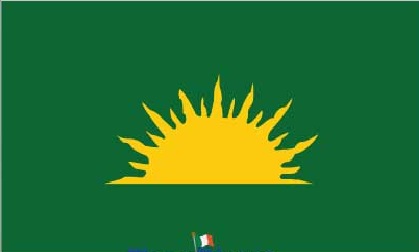
Irish Republican Brotherhood
Honouring the past ... Shaping the future.. Join the Irish Republican Brotherhood in pursuit of Freedom for all Irish People living in Ireland or who may return to Ireland after as result of the many adversities they had to face living in Ireand that gave then no choice at the time to sail away to distant shores.. so they can return to an Ireland that is completely free from outside control. An Irish run by the Irish People for the Irish People..
Pippin Drysdale (nee Carew-Reid Famous Australian Clay Artist
https://usaweekly.com.au/pippin-drysdale-artist
supports the aims of
the IRB The Irish Republicam Brotherhood
Lloyd Carew-Reid Australian Musician in New York is a suporter of the aims of the IRB Irish Republican Brotherhood Movement
Lloyd Carew-Reid who is a classical guitarist living in New York City,
who once played a cat-and-mouse game with Manhattan cops to fight
for the rights for buskers to make music in the New York Subways. now continues to campaign average American's constitutional rights...
"This is America!" was his thought.

Wayne Hastings Carew-Reid Perth Western Australian Multi Millionaire Perth Western Australian Businessman lends his support to the IRB the Irish Republocan Brotherhood

Wayne Hastings Carew-Reid Perth W.A. multi milliomaire And His Perth Splicotor Wife Anne Marie Carew-Reid suppprt the aims of the Irish Republicsn Movement in helping to bring about a truly free Ireland for the Irish People

Adam Carew-Reid the Pest West Westerm Australian State Mamager lends his support to the Irish Republican Movement. Adam Carew-Reid is the son of multi millionaire Perth Successful Businessman Wayne Hastings Carew-Reid and his Perth W.A. solicitotor Anne Marie Carew-Reid
The INL News Media Group is proud to be involved in informing the world about the Miriam Moriarty Owens Book
'Shh! 'Don't Tell' which is a true story about survival ,
,"Hidden away by a mother's Love... To the protective torture of the clergy glove ....
sentenced to a life of Hell... Before life began, the hammer fell ..."
Miriam Moriarty Owens was born in Tralee, County Kerry, Ireland..
"This story in one of survival, and a true depiction if how one small woman,
who was physically and mentally abused from early childhood right up to her early 40's,
overcome all obstacles that stood in her path,
and became a better brighter person..."
Anyone interested in purchasing a copy of 'Shh! 'Don't Tell'
please email: Sales@inltv.net
Irish Republican Brotherhood
Introduction letter from Tomas O’Riain the President fo the Irish Brotherhood IRB
All of those IRB inspired movements resulted in the 1916 Rebellion and its aims so wonderfully expressed in the 1916 Proclamation. This was followed by the 1918 general election and the establishment of Dáil Éireann a parliament for all Ireland and by the War of Independence. The British couldn’t win so they sued for a truce which in turn led to representatives of Dáil Éireann engaging in ‘settlement’ talks with the British Government.
The final outcome was a British enforced settlement under Lloyd George Britain’s PM’s threat of waging ‘Immediate and terrible war’ on the Irish people.
An imposed divided country was the result with a six county apartheid British Statelet in the north and a Twenty-Six County British Dominion “Free State” in the south with a British created parliament and a British imposed constitution.
This led to a civil war which was really a British inspired counter revolution with British money, guns and even the ship that bombarded Dublin in 1916. They defeated the republicans and left us with what we have today, two failed corrupt disintegrating states.
Today’s Twenty-Six County state is rapidly choking in its own corruption and mismanagement. The Leinster House politicians capitulated to the demands of the corrupt bankers and bailed out their failed gambling orgy with the people’s money and resources.
The British created CORRUPT judicial system, at the behest of the thieving banks is busy destroying the fabric of Irish society by unlawfully ejecting people from their homes in their tens of thousands.
The parasitic politicians do nothing but pass more and more repressive legislation to wring every last hard earned penny out of the people’s pockets. They exercise power without responsibility. That cannot be allowed to continue. It breeds oppressive totalitarian corruption.
The resurgent IRB must unite the people into a peaceful but powerful mass movement and reclaim the country north and south from the corrupt onslaught of bankers, politicians, the judiciary and their supporting medias spin and propaganda merchants.
We must build the IRB into a powerful united people’s movement to turn the tide and reclaim Ireland for this and the future generations of her noble and ancient people. The GAA has a million members and so can we.
In response to this great need the Irish Republican Brotherhood is reorganising and opening new branches or Circles throughout Ireland and amongst the Irish Diaspora. Membership is open to all Irish people over the age of 16.
Tomas O’Riain IRB President
Éireann go Brách - Ireland Forever.
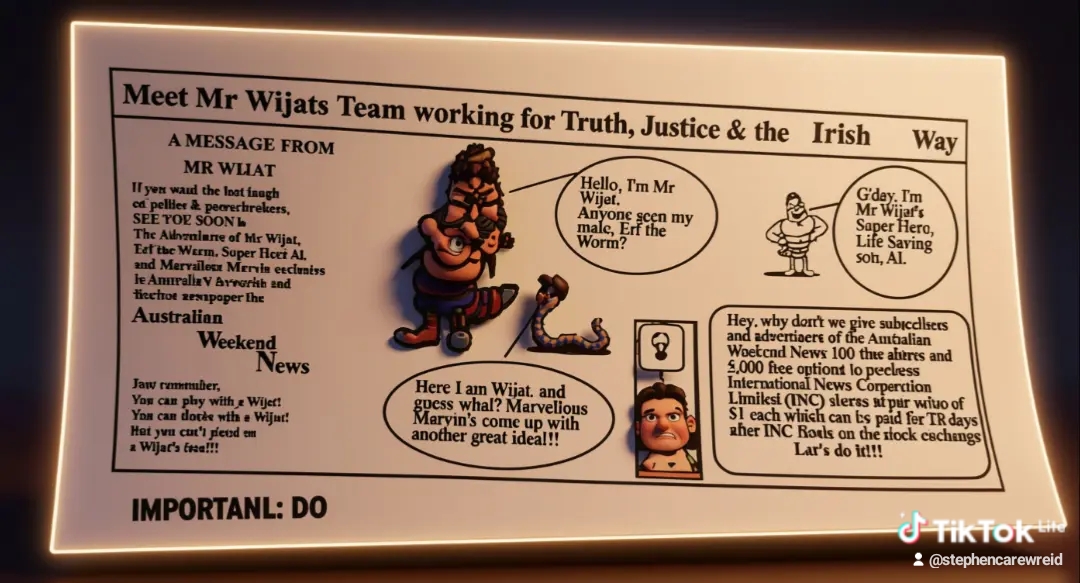
Mr Wijat and His Team Fighting for Truth ,Justice, the Irish Way and For A True Independent Irish Republic
A short message from Mr Wijat.
.".. I look forward to seeing you reading my favourite Irish Newspaper
The Irish People
JUST Remember . ....
You Can Play With A Wijat .....
You Can Dance With A Wijat ......
But You Can't Stand On A Wijat's Toes !!! "
Mr Wijat's and His Team's Investigation into what Irish Politicians Earn Each Year
As of the latest official public sector pay adjustments effective 1st June 2026, most Irish politicians receive a basic salary of around 119,467 euros per year, that scales upwards depending on their specific office and parliamentary duties. Irish politicians are paid as public servants, meaning their yearly salaries rise concurrently with broader public service pay deals.
Political pay consists of a flat-rate basic salary, supplemented by additional salaried allowances for specific government or leadership roles
Taoiseach (Irish Prime Minister) recieces a basic parliamentary salary of 119,467 plus an office allowance of 136,844
Michael Martin as at September 2026 is the Taoiseach of Ireland and earns a total of 256,311 euros per year plus many other benefits, lurks and perks.
With all the extra transport facilities,office running expenses, staff and extras provided for the office of the Irish Taoiseach of Ireland (the name used to describe the Irish Prime Minister) the estimated cost to the Irish People is estimated to be in excess of 500,000 Euros.
With all the extra transport, office running expenses, staff and extras provided to Irish Government Ministers the estimated cost to the Irish People to employ each Irish Government Minister is estimated to be I'm excess of 300,000 Euros.
The total estimated cost of the employment of all of the Elected TD's and full time Irish Public Servants in the Irish Government and Parliament is in excess of an estimated 50 million euros.
Most Irish Government Ministers earn been around 170,000 to 250,000 euros per year
Tanaiste (Irish Deputy Prime Minister) as at September 2026 is Simon Harris earns a basic yearly salary of 119,467 plus an office allowance of 116,960 which equates to total yearly salary 9f 236,427 euros per year
Ceann Comhairle (Irish Dail Speaker),receives a basic salary of 119,467 euros plus an office allowance of 149,055 which equates to 268,522 yearly salary
All Irish State Cabinet
Ministers receive a basic salary of 119,467 euros per year plus an office allowance of 96,699 euros per year which equates to a total yearly salary of 217,136 euros per year.
Minister for Foreign Affairs, Trade and Defence of Ireland as at September 2026 is Helen McEntee who recieces a basic salary of around 119,467 plus an office allowance of around 97,668 euros per year which equates to a total yearly salary of 217,136 euros per year salary
Ministers of the Irish State *Attending Cabinet Meetings) receive a basic salary of 119,467 plus an office allowance of 62,106 euros which equates to a total yearly salary of 181,573 euros per year
An Irish Backbencher in the Irish Parliament receives a basic yearly salary of 119,467 euros and no yearly office allowance
Senior Irish Cabinet Ministers as at September 2026 who earn at total of 217,136 euros per year salary include:
Helen McEntee Irish Minister for Foreign Affairs, Trade and Defence
Jim O'Callaghan Irish Minister for Justice, Home Affairs and Migration
James Lawless Irish Minister for Further Education, Research and Science
Hildegarde Naughton Irish Minister for Education and Youth
Martin Heydon Irish Minister for Agriculture, Food, Fisheries and the Marine
James Browne Irish Minister for Housing, Local Government and Heritage
Peter Burke Irish Minister for Enterprise, Tourism and Employment
Dara Calleary Irish Minister for Social Protection, RuralandCommunity
Norma Foley Irish Minister for Children, Disability and Equality
Darragh O'Brien Irish Minister for Climate, Energy,Environment and Transport
Jack Chambers Irish Minister for Public Expediture, Infrastructure and Digitalisation
Irish Ministers of State Attending Caninet ("SuperJuniors"), who are SpecialMinistersof State who regularly attend full Cabinet Meeting, because of their extra responsibilitiesall earna total yearly salary of 181,573 euros per year include:
Mary Butler, the IrishGovernment Chief Whip & Mental Health
Emer Higgins Irish Government Special Minister in charge of Disability
Noel Grealish Irish Special Minister for Food Production and New Markets
Sean Csnney Irish Special Minister for International and Road Transport and Logistics
Junior Irish Ministers of State as at September 2026who overseas Sub-portfolios but do not regularly sit at the cabinet meetings Table who receive a total yearly salary 267,759 euros per year include:
Thomas Byrne The Irish European Affairs and Defence Junior Minister
Michael Moynihan Special Irish Junior Minister for Special Education and Inclusion
Charlie McConalogue Irish Special Junior Minister for Sport and Postal Policy
Kevin "Boxer" Moran Irish Special Junior Minister for Public Works
Jennifer Murname O'Connoe Irish Special Junior Minister for Public Health, Well Being and Drugs
Neil Richmond Irish Special Junior Minister for International Development and Diaspora
Jerry Buttimer Irish Special Junior Minister for Charities,;Gaeltacht and Rural Transport
John Cummins Irish Special Junior Minister for Local Government and Planning
Christopher O'Sullivan Irish Special Junior Minister is a sub portfolio role
Robert Troy Irish Junior Minister in a sub portfolio role
Nial Collins Irish Special Junior Minister in a sub portfolio role
Niamh Smyth Irish Special Junior Minister in a sub portfolio role
Alan Dillon Irish Special Junior Minister in a sub portfolio role of Employment, Small Business and Retail
Timmy Dooley Irish Special Junior Minister in a sub portfolio role
Colm Brophy Irish SpecialJunior Minister for Migration.
Marian Harkin Irish Special Junior Minister in a sub portfolio role
Frank Feighan Irish Special Junior Minister for Public Procurement, Digitalisation and eGovernment
, Mr Wijat and His Team Fighting For Truth Justice and the Irish Way asks ...
"Why Does The EU Controlled Irish Government Descriminate Against The Irish People By Charging A Property Death Tax On Family Members Inherenting A Property In a Family Members Will, which in many instances forcing the family member who inherited a property to have to sell the inherited property?"
SAME HOME DIFFERENT COUNTRIES -
A VERY DIFFERENT OUTCOME
A 600,000 Euro Home in Ireland
If the property is left to a son or daughter 60,000 Death Tax has to be paid to the Irish Government
In Washington USA there is no death tax due on a 600,000 USA Dollar Property
If the property is left to a brother, sister, nephew or niece has an 184.400 euro Death Tax has to be paid to the Irish Government
In Washington USA there is no death tax on a 600,000 USA Dollar Property
Of the property is left to a partner, life time friend or devoted carer has an 191,400 euro Death Tax has to be paid to the Irish Government
In Washington USA there is no death tax on a 600,000 USA Dollar Property
Mr Wijat and the INL News Media Group support all all Death Tax Law in Ireland should be completely removed. However, a now retired Irish Government Public Servant whistleblower has made a sworn statement to the INL News Media Group's Investigation Team that includes that there are over 30 MI5/MI6 Assets are employed full time in the Irish Government as Full Time Public Servants... who on behalf on MI5/M16 and the Full Time Public Servants working in in EU Commission effectively control of 80% plus every decision and action ever elected Irish Politician take and all laws introduced or not introduced in the Irish Parliament..
BBC - History - 1916 Easter Rising - Profiles - The Irish Republican Brotherhood
Irish Republican Brotherhood (IRB)
The Irish Republican Brotherhood (IRB) was a small, secret, revolutionary body (known as the Fenian movement in the 1850s and 60s), committed to the use of force to establish an independent Irish republic. After organising an abortive rising in March 1867, it suffered deep internal divisions over leadership and strategy – whether it was best to strike at England in Ireland or in Canada. The issue was resolved after a series of failed interventions in Canada in 1866, 67 and 71. The IRB’s reorganisation was begun after the release from prison in 1871 of two of its most effective leaders - Jeremiah O`Donovan Rossa and John Devoy. Its constitution was amended in 1873; it was thereafter to be governed by a partially elected, eleven-man Supreme Council, representative of its seven British and Irish electoral divisions; members swore to regard this Council as ‘the Government of the Irish Republic.
With no immediate prospect of effective revolutionary action, the IRB leaders agreed to co-operate with the Irish Parliamentary Party, then under Parnell’s dynamic leadership, in mobilising tenant agitation for land reform (known as the ‘new departure’, 1879-82). They hoped to weaken British authority and to generate increased popular support for the republican cause. Meanwhile, during the 1880s, the Brotherhood organised a dynamite campaign in English cities.
Riven by continuing internal squabbles, the IRB was unable to exploit the weakness and divisions in the constitutional movement following Parnell’s divorce scandal, 1890-91. It was eventually rejuvenated, between 1910-12. The key figure in purging its aging leadership was Thomas Clarke, himself a veteran republican. Supported by a new generation of young, committed members he succeeded in bringing a new sense of purpose and vitality to the organisation, so that it was able to exploit any favourable opportunities for insurrection when they arose. In 1913, a group within the IRB encouraged the formation of the Irish Volunteer Force (IVF). After the force split (September 1914), these elements (including Clarke) successfully infiltrated the dissident IVF rump which had rejected Redmond’s appeal to enlist in the British Army. They hoped to use these Volunteers in an insurrection, which they considered opportune, given the outbreak of war in Europe. The Easter Rising was planned by the seven-man IRB Military Council - a body set up on Clarke’s initiative (May 1915), whose activities were concealed even from the IRB Supreme Council.
Many republicans blamed the secretiveness of the IRB for the confusion surrounding the Rising and for its failure. After World War One, they argued that it had served its purpose and was no longer needed, and that the Dail government - established January 1919 - should control and direct the Irish Republican Army (IRA). The revival of the IRB after 1916 and its considerable influence within both the Dail and the IRA during the Anglo- Irish war (1919-21), was chiefly because Michael Collins, the IRB President and Dail Minister of Finance, still valued it. He considered that it had a vital role to play, especially in gathering intelligence and he resisted the efforts of other Sinn Féin politicians to gain control of the IRA’s military campaign. The IRB divided over the Treaty (December 1921) - most rank and file members opposed it - and the organisation did not survive the impact of the Irish Civil War and formation of the Irish Free State.
John Devoy ©
The Irish Republican Brotherhood (IRB)
The Irish Republican Brotherhood (IRB) was a small, secret, revolutionary body (known as the Fenian movement in the 1850s and 60s), committed to the use of force to establish an independent Irish republic. After organising an abortive rising in March 1867, it suffered deep internal divisions over leadership and strategy – whether it was best to strike at England in Ireland or in Canada. The issue was resolved after a series of failed interventions in Canada in 1866, 67 and 71. The IRB’s reorganisation was begun after the release from prison in 1871 of two of its most effective leaders - Jeremiah O`Donovan Rossa and John Devoy. Its constitution was amended in 1873; it was thereafter to be governed by a partially elected, eleven-man Supreme Council, representative of its seven British and Irish electoral divisions; members swore to regard this Council as ‘the Government of the Irish Republic’.
John Devoy
With no immediate prospect of effective revolutionary action, the IRB leaders agreed to co-operate with the Irish Parliamentary Party, then under Parnell’s dynamic leadership, in mobilising tenant agitation for land reform (known as the ‘new departure’, 1879-82). They hoped to weaken British authority and to generate increased popular support for the republican cause. Meanwhile, during the 1880s, the Brotherhood organised a dynamite campaign in English cities.
Riven by continuing internal squabbles, the IRB was unable to exploit the weakness and divisions in the constitutional movement following Parnell’s divorce scandal, 1890-91. It was eventually rejuvenated, between 1910-12. The key figure in purging its aging leadership was Thomas Clarke, himself a veteran republican. Supported by a new generation of young, committed members he succeeded in bringing a new sense of purpose and vitality to the organisation, so that it was able to exploit any favourable opportunities for insurrection when they arose. In 1913, a group within the IRB encouraged the formation of the Irish Volunteer Force (IVF). After the force split (September 1914), these elements (including Clarke) successfully infiltrated the dissident IVF rump which had rejected Redmond’s appeal to enlist in the British Army. They hoped to use these Volunteers in an insurrection, which they considered opportune, given the outbreak of war in Europe. The Easter Rising was planned by the seven-man IRB Military Council - a body set up on Clarke’s initiative (May 1915), whose activities were concealed even from the IRB Supreme Council.
Many republicans blamed the secretiveness of the IRB for the confusion surrounding the Rising and for its failure. After World War One, they argued that it had served its purpose and was no longer needed, and that the Dail government - established January 1919 - should control and direct the Irish Republican Army (IRA). The revival of the IRB after 1916 and its considerable influence within both the Dail and the IRA during the Anglo- Irish war (1919-21), was chiefly because Michael Collins, the IRB President and Dail Minister of Finance, still valued it. He considered that it had a vital role to play, especially in gathering intelligence and he resisted the efforts of other Sinn Féin politicians to gain control of the IRA’s military campaign. The IRB divided over the Treaty (December 1921) - most rank and file members opposed it - and the organisation did not survive the impact of the Irish Civil War and formation of the Irish Free State.
The Irish Republican Brotherhood
James Stephens—formally established the IRB in Peter Lanigan’s timber yard, Lombard Street, Dublin, on St Patrick’s Day 1858.
On St Patrick’s Day 1858, in Peter Lanigan’s timber yard, Lombard Street, Dublin, James Stephens formally established the Irish Republican Brotherhood. It was originally named the Irish Revolutionary Brotherhood, but soon came to be known as the Irish Republican Brotherhood (IRB). The IRB was a small, secret, revolutionary body whose sole object was to ‘establish and maintain a free and independent Republican Government in Ireland’. Stephens was a Young Irelander, and was a lieutenant to William Smith O’Brien at the ‘Battle of Widow McCormack’s cabbage patch’ in Ballingary, Co. Tipperary, in August 1848. He was wounded three times and was smuggled onto a ship to England and then to France, where he spent the next eight years. Upon his return to Dublin in 1856, he determined to organise the revolutionary movement and that led to the founding of the IRB.It became known as the Fenian movement in the 1850s and 1860s, and was committed to the use of force to establish an independent Irish republic.
After organising an abortive rising in March 1867, it suffered deep internal divisions over its leadership and strategy in both the United States and Ireland—whether it was best to strike at England, in Ireland or in Canada. The issue was resolved after a series of failed interventions in Canada in 1866, 1867 and 1871, and after bombings in England that did not lead Ireland closer to independence. The IRB was unable to exploit the weaknesses and divisions in the constitutional movement following Parnell’s divorce scandal, 1890–1.
It was eventually rejuvenated in Ireland about 1907, led by Bulmer Hobson and Tom Clarke, thus preparing the way for all that followed.The governing body was the supreme council. Before 1916 this consisted of eleven members, and after the 1917 reorganisation it contained fifteen members. When not in session, all powers of the supreme council, except for declaring war, devolved onto an executive of three: the president, secretary and treasurer. The constitution provided for the establishment of a military council, subordinate to the supreme council. (The seven signatories of the 1916 Proclamation constituted the entire military council at that time.)Its constitution was dedicated to the use of force against England at any favourable opportunity, but this was to be a democratic decision:
‘The IRB shall await the decision of the Irish Nation as expressed by a majority of the Irish people as to the fit hour of inaugurating a war against England and shall, pending such an emergency, lend its support to every movement calculated to advance the cause of Irish independence, consistent with the preservation of its own integrity’, a clause adopted in 1873 in response to the controversies arising from the 1867 Rising.The IRB planned the 1916 Rising; the Irish Volunteers and the Irish Citizen Army made it possible.
The establishment of the Irish Volunteers gave the IRB the great opportunity to train and equip its members as a military body for the purpose of securing independence for Ireland by force of arms and securing the cooperation of all Irish military bodies in the accomplishment of its objectives.Numerically the IRB probably never exceeded 2,000 members, but they were all extremely loyal and well trained, and there was very tight security. The executions of 1916 just about wiped out the supreme council, and after the prisoners were released the IRB had to reconstitute itself. In 1917 Seán McGarry was elected president, Michael Collins secretary and Diarmuid Lynch treasurer.
According to the IRB constitution, the president, ‘in fact, as well as by right’, was regarded as the head of the government of the Irish Republic. HI
Joseph E.A. Connell is the author of Dublin in rebellion: a directory, 1913–1923 (Lilliput Press, 2006).
Further reading:O. McGee, The IRB: the Irish Republican Brotherhood from the Land League to Sinn Féin (Dublin, 2005).W. Mandle, ‘The IRB and the beginning of the Gaelic Athletic Association’, Irish Historical Studies XX (80) (1977).
Categories18th–19th - Century History, General, Irish Republican Brotherhood / Fenians, Issue 6 (Nov/Dec 2011), Reviews, Volume 19
Elizabeth Bowen’s selected Irish writingsGerard Murphy’s The year of disappearances
An apology from the IRB publishers of the www..Irishrepublicanbrotherhood.ie and www.irishrepublicanbrotherhood.com websites which appear to be hacked by those that do not like the ever growing strength and support the Irish Republican Brotherhood is gaining day by day to bring true independence and freedom to the Irish People in Ireland. It is hoped the www.irishrepublicanbrotherhood.com and www Irishrepublicanbrotherhood.ie websites are back online as soon as possible.
In the meantime the
https://www.irishpeople.ie Is working ok.
All emails you want to send to the Irish Republican Brotherhood please use the following email address:
info@irishrepublicanbrotherhood.com which are on a completely different much more secure server.
GMail LogIn Link. Google Search Link
YahooMail LogIn Link AOLMail LogIn Link
INL News Corp Ltd LogIn Link For Email Accounts
The INL News Media Group Suing The Irish State, Séamus McEnaney and the McEnaney Group of Family Companies, Helen McEntee, Simon Harris, Drew Harris, Dublin City Council, An Garda Síochána Commissioner and 30 other Named Defendants for Excess of 100 billion euros in High Court of Ireland Plenary Summons H.P.2025.739 John Carew-Reid as Trustee for the INL News Media Group v Republic of Ireland and 37 others
His Honour Justice Brian Cregan has ordered that H.P.2025.739 John Carew-Reid aa Trustee for the INL News Media Group v Republic of Ireland and 37 Other Named Defendants will be placed on the Expedited Trial List and will not be struck out on any legal technicality
In the Statement of Claim in H.P.2025.739 John Carew-Reid and the INL News Media Group will use the 100 plus billion euros damages due to them to solve the Lack of Affordable Housing Problem and Irish Homeless in Ireland by providing housing loans to Irish People on no deposit at one percent interest fixed rate pee year for life of thr borrower with the borrower being able pass on the 1% fixed interest rate loan to their family and children who inherit their home.
.The INL News Media Group's Investigation Team have uncovered that the USA Government owns the Irish State around 550 billion euros. So the INL News Media Group asks the 64 dollar question.. "Why Doesn't The Irish State demand that the US Government immediately repay the Irish back at least 200 billion so the Irish State can have the immediate cash to solve the lack of hospital beds in Irish Hospitals, lack of Schools in Ireland, high cost of living in Ireland due to excessive indirect taxation, lack of affordable housing and homeless problems in Dublin anf throughout the whole of Ireland
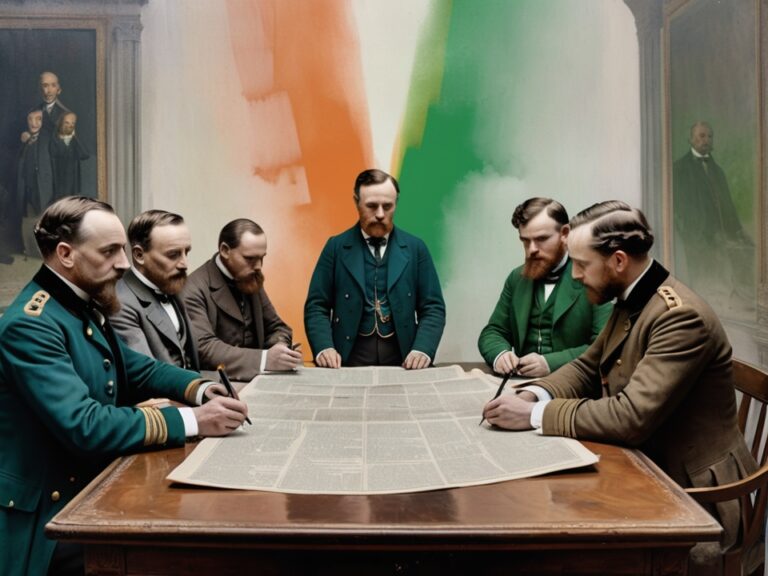
GMail LogIn Link Google Search Link
INLNews Media Group's Email LogIn Link
Yahoo Mail LogIn Link GoDaddy LogIn Link Al Jazeera Live
- Handy Easy Email and World News Links
GMail GoogleSearch YahooMail HotMail
AOLMail WebMail INLTV.co.uk GMail - AOLMail Twitter euronews.com/live
- aljazeera.com/live
USAMAIL WikiLeaks wikipedia.org Facebook INLNews - MyWayEmail INLNews AWN.bz rte.ie/player/NEWS
- news.sky.com/watch-live New York Post nypost.com YouTube
Australian News and 180 million year History Highlights
GoDaddy Secure Account Log In.
INLTV Independent and Uncensored News
Australian News and 180 million year History Highlights
GoDaddy Secure Account Log In.
 The Irish Republican Brotherhood (IRB) was originally founded by on the 17th March 1858 and was preceded by Young Ireland. The official newspaper for the IRB is The Irish People. The ideology of the IRB is Irish Republicanism and Irish Nationalism, with Irish National Affiliations with the Irish Volunteers (1913 to 1917), the Irish Republican Army (1917 to 1923( and the Irish National Army (1922-1924). The American Affiliate of the IRB is the Fenian Brotherhood (1858-1867) and Clan na Gael (2867-1924). The colours of the IRB are Green and Gold. The slogan of the IRB is Erin go bragn.
The Irish Republican Brotherhood (IRB( originated as a secret oath-bound fraternal organisation dedicated to the establishment of an "independent democratic Irish Republic in Ireland in 1858. The IRB's counterpart in the USA and Canada wax initially the Fenian Brotherhood. However, from the 1870's it was Clan na Gael.
The members of both wings of the movement are often referred to as "Fenians".
The IRB played an important role in the history of Ireland, as the Chief advocate of Irish Republicanism during the campaign for Ireland's independence from the United Kingdom,. The IRB was the successor to movements such as the United Irishmen of the 1790’s and the Young Irelanders in the 1840's.
Eire Irish Harp Symbol
Site Content
Additional Information
IRB Irish Republican Brotherhood TiHistory
Chronology
Sixty-six years, 1848 to 1924
From the wreck of the Young Ireland rising to the dissolution of the Brotherhood in the Irish Free State. The dates are the conventional ones used in the standard literature.

1848
Young Ireland collapses
The Young Ireland rising of 1848 ends in a scattered skirmish and the scattering of its veterans — to America, to Australia, to prison. Those exiles seed the next generation of separatists.
1858
Founded in Dublin and New York
On St Patrick’s Day, James Stephens founds the Irish Republican Brotherhood in Dublin. Later the same year, John O’Mahony founds the Fenian Brotherhood in New York. Twin organisations on either side of the Atlantic.
1863–65
The movement grows
The Fenian Brotherhood expands rapidly among Irish Americans, many of them veterans of the American Civil War. Recruiters travel to Ireland and to Britain; membership estimates rise sharply, though the figures come largely from police reports.
1865
The British crackdown
The IRB newspaper The Irish People is seized and suppressed in Dublin. Stephens, Jeremiah O’Donovan Rossa and others are arrested. The movement is decapitated at its centre but survives in the circles.
1867
The Fenian Rising
A promised mass insurrection in Ireland collapses into scattered, poorly armed local actions against far better equipped British forces. It fails militarily, and is remembered chiefly for the arrests and executions that followed.
1867
Manchester and the Manchester Martyrs
IRB men free two Fenian prisoners in Manchester; a police sergeant is killed in the struggle. Three men — William Allen, Michael Larkin and Michael O’Brien — are hanged for the killing. They become enduring Fenian martyrs.
1867
The Clerkenwell explosion
A bomb intended to blow open the wall of Clerkenwell prison in London kills civilian residents when the wall falls into the street. The deaths badly damage public sympathy for the movement in Britain.
1870s
The New Departure
Fenian ideas ally at times with agrarian struggle and the Land League, in a period usually called the New Departure. Separatists and constitutional nationalists cooperate over land without agreeing about the state.
1880s
The dynamite campaign
Fenian-linked attacks in Britain aim to force Irish concessions through fear. The campaign alienates much public opinion at home and abroad and accomplishes little politically.
1890s–1900s
A younger generation revives the IRB
New leaders such as Thomas Clarke and Seán Mac Diarmada rebuild the organisation among a younger generation, committed to an armed rising rather than to Home Rule. They work quietly inside Irish nationalist clubs and societies.
1915
The funeral of O’Donovan Rossa
The old Fenian Jeremiah O’Donovan Rossa dies in New York and is buried in Dublin. The funeral becomes a mass political event, and Patrick Pearse’s graveside oration is widely read afterwards as a turning point.
1913–16
The IRB and the Irish Volunteers
The IRB progressively takes control of the force raised as the Irish Volunteers, and a small Military Council inside the Supreme Council secretly plans an insurrection without informing the organisation as a whole.
1916
The Easter Rising
The Military Council’s rebellion is suppressed within a week. The executions that follow transform Irish opinion. The rising’s meaning comes from what happened after it, not from its military outcome.
1919–21
The Irish War of Independence
Veterans of the IRB and of 1916 lead the guerrilla campaign against British forces, coordinated from Dublin through an underground administration and a parallel court system.
1919–22
Treaty and Civil War
The Anglo-Irish Treaty splits Ireland, and former Fenians take opposite sides in the Irish Civil War. Men who had shared an oath fought each other in the Free State’s first years.
1924
The IRB is wound up
The organisation is formally dissolved, its purpose judged fulfilled by the Irish Free State. Its members disperse into the new state’s politics, administration and army.
A note on method: dates, definitions and interpretations in this chronology can be disputed among historians. The founding date, the movement's size in the 1860s, the degree of central control after 1866, the character of the 1916 leadership, and even the boundaries of the term 'Fenian' are all matters on which scholarly accounts differ. This page reflects a scholarly overview and follows the cautious reading of the standard literature rather than any single account; the works it draws on are cited under 'Sources & further reading'.
Where the record is contested — the size of the movement in the 1860s, the degree of central control after 1866, the number of those involved in the planning of 1916 — this timeline follows the cautious reading rather than the dramatic one.
A note on the endpoint: the Brotherhood’s formal dissolution in 1924 — when its Supreme Council dissolved and its remaining organisation passed into the army council structure from which the IRA descended — is the established endpoint in the historical literature. From the 1920s onward, various later and present-day groups have claimed to continue or inherit the IRB’s name and tradition; these are separate organisations, and the historical record does not treat them as the same body. See the section 'The IRB name after 1924' below, and the Sources list, for context and further reading.
IRB Irish Republican Brotherhood 1916 Rising
IRB Irish Republican Brotherhood 1916 Rising
IRB Irish Republican Brotherhood the Irish 1916 Rising
Easter Week 1916 · The decisive act
https://irishrepublicanbrotherhood.net/
A rising of six days, and of the sixty years after it
The Military Council of the IRB planned and led the rebellion of Easter 1916. It was militarily defeated within a week. What gave it lasting force was what the British government did next.
01
The plan
A Military Council of a handful of men inside the IRB’s Supreme Council planned the insurrection in secret, committing the organisation’s name without consulting it. Weapons were sought in Germany, and a rising was fixed for Easter week on the reasoning that a British war was Ireland’s opportunity.
02
The Proclamation
Printed in secret on Easter Sunday and read from the steps of the General Post Office on Easter Monday by Patrick Pearse, the Proclamation declared an Irish Republic and named the seven signatories of the Provisional Government. Fewer than a thousand copies are thought to have been produced on the day.
03
The city
Volunteers and the Irish Citizen Army occupied the General Post Office, the Four Courts, Jacob’s factory, Boland’s Mills and other strongpoints. Fighting, shelling and fires destroyed much of the centre of Dublin; civilian deaths were the largest single category of casualties.
04
The surrender
After six days, cut off and outgunned by British artillery and troops, Pearse issued the order to surrender on Saturday 29 April to prevent further civilian slaughter. Around 3,400 people were detained in the aftermath, and most were later released.
05
The executions
Between 3 and 12 May, fifteen of the leaders were shot in the Stonebreakers’ Yard at Kilmainham Gaol, including the seven signatories of the Proclamation. Roger Casement was hanged in London in August. The executions, and the secrecy of the courts-martial, turned public opinion sharply toward the rebels.
06
The aftermath
Execution, internment and the threat of conscription in 1918 changed a rising that had been condemned by much of the public into the founding event of the independent state. The military rising had failed; its political consequences succeeded.
The Rising is remembered for its consequences rather than its military course: for the executions at Kilmainham, for the internment camps, and for the way a week of street fighting in Dublin changed what a majority of Irish people would accept as a settlement.
This section describes armed action and its outcome because they are the historical record. It does not endorse the use of force, then or now.
Legacy, debate & interpretation
What the Brotherhood was worth is still argued over
Historians agree about much of the chronology and disagree, sometimes sharply, about its meaning. What follows sets out the arguments as arguments, with the strongest version of each.
Separatism against constitutionalism
One long-running argument sets the IRB against the parliamentary tradition of O’Connell, Butt, Parnell and Redmond. Constitutional nationalists argued that Ireland gained more through Westminster, land reform and party discipline than through conspiracy; separatists argued that parliamentary gains could always be repealed, and that only an Irish government in Dublin could be relied upon. Historians point out that the two traditions often fed on each other: land agitation created the mass mobilisation that separatists later used, and parliamentary crises repeatedly discredited the constitutional route for a section of nationalist opinion.
Did armed insurrection help or harm?
The record is genuinely mixed. The 1867 rising and the 1880s dynamite campaign achieved little and cost the movement public goodwill, especially after the killing of civilians in Manchester and at Clerkenwell. In 1916, by contrast, a militarily hopeless week produced a durable political transformation, largely because of the British response to it. Whether this argues for the wisdom of insurrection, or simply records that a failed rising can sometimes succeed politically, is a question on which historians do not agree — and one that tends to be answered with the benefit of hindsight.
How effective was the organisation?
The IRB was small, faction-ridden, often short of money and repeatedly penetrated by informers; it was defeated in the field in 1867 and did not govern Ireland after 1916. Its defenders emphasise its persistence: it kept an insurrectionary tradition alive for sixty years, supplied the personnel of the 1919–21 campaign, and was wound up in 1924 because its members believed its objective had been reached. Its critics note that its most consequential act, the 1916 Rising, was planned by a self-selected committee that ignored the organisation it claimed to lead.
The long shadow of 1916
The rising became a founding story for the Irish state and, later, a contested one. For much of the twentieth century it was officially commemorated as the origin of independence; from the 1960s onward the same events were read very differently by those who argued that the resort to violence in Ireland had its own costs. The way a state remembers a founding rebellion, and the way historians write about it, have seldom been the same thing. This resource describes the movement; it does not adjudicate the argument.

This page describes the arguments and does not choose between them. Readers who want a verdict will find several to choose from in the standard literature listed below.
Assessment of the Brotherhood remains contested among historians — over its effectiveness, its internal divisions, and the weight of its part in 1916; the positions outlined here reflect differing scholarly readings, with sources cited below.
Please read
An important distinction
This site is a historical and educational resource about the Irish Republican Brotherhood, an organisation that existed between 1858 and 1924 and was formally wound up in 1924.
It is not connected to, does not represent, and does not support any present-day organisation that uses the name of the Irish Republican Brotherhood, the Fenian Brotherhood, or the Fenian movement. Any such organisation is a separate and unrelated body, and nothing on this page should be read as describing, endorsing or speaking for it.
This site contains no membership, no sign-up, no recruitment, no fundraising, no petition and no contact form. Nothing here is an invitation to act. The material is compiled solely for study by students, teachers, researchers and anyone interested in nineteenth- and early twentieth-century Irish history.
The site does not glorify armed action. Violence of any kind is described here because it happened, and because it is part of the historical record that has to be understood; describing a thing is not approving of it.
No membership
No recruitment
No fundraising
No petition
No contact form
No advocacy
Dates, definitions and interpretations in this material can be disputed among historians. This site presents a scholarly overview with its sources cited, not a single authoritative account.
Clarification
The IRB name after 1924
A note on the organisation that was wound up in 1924, and on the separate bodies that have since used its name.
The organisation and its dates
The Irish Republican Brotherhood was an oath-bound revolutionary organisation founded in 1858. It existed as an organisation until 1924, when it was formally wound up. Those are the two dates this resource covers.
The winding-up of 1924
At that winding-up, the Brotherhood’s remaining organisation was absorbed into the army council structure from which the IRA descended, and its Supreme Council was dissolved.
Later use of the name
From the 1920s onward, and at various points since, other and later groups have taken the Brotherhood’s name or claimed to inherit its tradition. These are separate organisations from the historical Brotherhood, with their own histories, purposes and personnel, and they are not the body described on this page.
The scope of this resource
This site documents the historical Irish Republican Brotherhood only. The appearance of its name, or of a claimed inheritance from it, elsewhere is outside the scope of this resource, and nothing here should be read as describing, endorsing or speaking for any such group.
The distinction is drawn because the name is easily mistaken in print and online. The historical record covered by this resource closes in 1924 and does not follow the name beyond that point.
The 1924 dissolution is the established endpoint of the historical Brotherhood, but the precise date, the completeness of the winding-up, and the interpretation of the transfer into the army council structure are matters on which historians can differ; this page follows the scholarly literature and cites its sources.
Sources & further reading
Where this history comes from
A starting list rather than a bibliography: the principal archives for the period, and a set of standard scholarly works on Fenianism and on 1916.
Archives & reference collections
Bureau of Military History, 1913–21
Witness statements gathered from survivors of the revolutionary period between 1947 and 1957, now held and published digitally by the Military Archives.
Military Archives, Ireland
Holdings including the Military Service Pensions Collection and Bureau of Military History material, catalogued and searchable online.
Dictionary of Irish Biography
Standard scholarly biographical reference for Irish figures, published by the Royal Irish Academy, with entries on Stephens, O’Mahony, O’Donovan Rossa, Clarke, Mac Diarmada, Pearse and Connolly.
National Library of Ireland
Manuscript collections, newspapers and printed ephemera relating to the Fenian movement and to the years around 1916.
National Archives of Ireland
State and police records, including the files kept on the IRB and on Fenian activities in Ireland and Britain.
Further reading
Owen McGee, The IRB: The Irish Republican Brotherhood from the Land League to Sinn Féin
A study of the organisation’s later, quieter decades and its revival before 1916.
R. V. Comerford, The Fenians in Context: Irish Politics and Society 1848–82
Treats Fenianism as a social and political phenomenon rather than only a conspiracy.
Marcus Bourke, The O’Donovan Rossa Story
A life of the Fenian journalist and prisoner, and of the circles he moved in.
Brian Jenkins, Fenians and Anglo-American Relations during Reconstruction
On the American dimension of the movement and its diplomatic consequences.
Michael Foy and Brian Barton, The Easter Rising
A detailed narrative account of the events of Easter week 1916 in Dublin.
Charles Townshend, Easter 1916: The Irish Rebellion
A standard modern account, including the planning and the aftermath in Ireland and Britain.
Roy Foster, Vivid Faces: The Revolutionary Generation in Ireland 1890–1923
A social portrait of the generation who made the revolution.
Leon Ó Broin, Revolutionary Underground: The Story of the Irish Republican Brotherhood, 1858–1924
A history of the Brotherhood whose narrative runs through to its winding-up in 1924 and the dissolution of its Supreme Council.
Titles are listed as pointers to the field and are described only by their subject. No claim is made here about the argument any individual work advances; readers should go to the works and to the archives themselves. Archive and reference collections may have their own reading-room and reproduction conditions, which researchers should check before travelling. Dates, definitions and interpretations in this subject can be disputed among historians; the works above represent differing scholarly positions, and this site offers a scholarly overview with citations rather than a single authoritative account.
The Irish Republican Brotherhood Founded in 1858
A Fenian history · An educational and historical resource
An educational and historical resource. No recruitment, no membership.
The material is compiled for study. Corrections from historians are welcome and will be incorporated; nothing on this page is offered as a final word on a period that is still being researched.
Sections
- The Brotherhood
- Timeline
- Fenian America
- Key Figures
- Easter Rising 1916
- Legacy & Debate
- Sources
- Disclaimer
About this resource
Covers the Fenian movement from its foundation in 1858 to the dissolution of the Brotherhood in 1924.
Historical organisation, wound up in 1924. This site is not connected to, and does not support, any present-day body using the name.
No petitions, no membership, no donations, no contact forms.
A historical record, compiled for study
Irish history editorial contact
Corrections, source submissions and research enquiries.
IRB Key Figures in the development of the Irish Republican B
IRB Key Figures in the development of the Irish Republican Brotherhood
IRB Key Figures in the development of the Irish Republican Brotherhood
https://irishrepublicanbrotherhood.net/
https://irishrepublicanbrotherhood.net/
This is a long for
Key figures
Seven people, six decades
Founders, organisers, prisoners and signatories. These notes describe what the historical record shows, including the parts that are unflattering.
JS
James Stephens
1825–1901
Founder and organiser, Dublin
A former Young Irelander and railway engineer, Stephens founded the IRB in Dublin in 1858 and built its cell structure, its oath and its transatlantic arrangements with O’Mahony. His control of the movement collapsed after his 1865 arrest and escape; he was deposed as head of the organisation in 1866 and spent his later life in exile and in writing.
JOM
John O’Mahony
1815–1877
Founder in America, scholar
A Gaelic scholar and translator of Irish literature, O’Mahony founded the Fenian Brotherhood in New York in 1858 as the American counterpart of the IRB. He presided over a body that raised money and arms for Ireland, and he was ousted from its leadership in 1865 as more militant factions took hold.
JODR
Jeremiah O’Donovan Rossa
1831–1915
Veteran, journalist, prisoner
Manager of The Irish People, O’Donovan Rossa was arrested in 1865 and sentenced to penal servitude; he was released in 1871 and went to America, where he remained a public and combative figure in Fenian politics. His death in New York in 1915 and burial in Dublin were organised by the IRB as a demonstration, and the funeral became one of the movement’s largest political occasions.
TC
Thomas Clarke
1858–1916
Old Fenian, 1916 rebel
Jailed as a young IRB man in 1883 and released in 1898, Clarke returned to Ireland in 1907 and rebuilt the organisation as its most senior figure in Dublin. He was the first signatory of the 1916 Proclamation and was executed at Kilmainham Gaol on 3 May 1916.
SMD
Seán Mac Diarmada
1883–1916
Organiser, signatory
A travelling organiser and manager of the newspaper Irish Freedom, Mac Diarmada recruited widely across the country in the years before 1916 and sat on the IRB Military Council. He was executed at Kilmainham Gaol on 12 May 1916.
PP
Patrick Pearse
1879–1916
Writer and leader of 1916
A teacher, writer and Irish-language advocate, Pearse came to separatism through the revival of Irish culture and joined the IRB shortly before 1916. He read the Proclamation outside the General Post Office and was executed at Kilmainham Gaol on 3 May 1916.
JC
James Connolly
1868–1916
Labour leader, co-leader of 1916
Born in Edinburgh to Irish parents, Connolly was a socialist organiser, founder of the Irish Labour Party and commander of the Irish Citizen Army. He was co-opted onto the Military Council in 1916 and, wounded, was executed at Kilmainham Gaol on 12 May 1916.
Dates follow the standard biographical reference works. Where a person's motives or character are disputed, this resource says so rather than settling the question.
Legacy, debate & interpretation Over The IRB Irish Republic
What the IRB Irish Republican Brotherhood was worth is still argued over
Legacy, debate & interpretation
What the Brotherhood was worth is still argued over
Historians agree about much of the chronology and disagree, sometimes sharply, about its meaning. What follows sets out the arguments as arguments, with the strongest version of each.
Separatism against constitutionalism
One long-running argument sets the IRB against the parliamentary tradition of O’Connell, Butt, Parnell and Redmond. Constitutional nationalists argued that Ireland gained more through Westminster, land reform and party discipline than through conspiracy; separatists argued that parliamentary gains could always be repealed, and that only an Irish government in Dublin could be relied upon. Historians point out that the two traditions often fed on each other: land agitation created the mass mobilisation that separatists later used, and parliamentary crises repeatedly discredited the constitutional route for a section of nationalist opinion.
Did armed insurrection help or harm?
The record is genuinely mixed. The 1867 rising and the 1880s dynamite campaign achieved little and cost the movement public goodwill, especially after the killing of civilians in Manchester and at Clerkenwell. In 1916, by contrast, a militarily hopeless week produced a durable political transformation, largely because of the British response to it. Whether this argues for the wisdom of insurrection, or simply records that a failed rising can sometimes succeed politically, is a question on which historians do not agree — and one that tends to be answered with the benefit of hindsight.
How effective was the organisation?
The IRB was small, faction-ridden, often short of money and repeatedly penetrated by informers; it was defeated in the field in 1867 and did not govern Ireland after 1916. Its defenders emphasise its persistence: it kept an insurrectionary tradition alive for sixty years, supplied the personnel of the 1919–21 campaign, and was wound up in 1924 because its members believed its objective had been reached. Its critics note that its most consequential act, the 1916 Rising, was planned by a self-selected committee that ignored the organisation it claimed to lead.
The long shadow of 1916
The rising became a founding story for the Irish state and, later, a contested one. For much of the twentieth century it was officially commemorated as the origin of independence; from the 1960s onward the same events were read very differently by those who argued that the resort to violence in Ireland had its own costs. The way a state remembers a founding rebellion, and the way historians write about it, have seldom been the same thing. This resource describes the movement; it does not adjudicate the argument.
This page describes the arguments and does not choose between them. Readers who want a verdict will find several to choose from in the standard literature listed below.
Assessment of the Brotherhood remains contested among historians — over its effectiveness, its internal divisions, and the weight of its part in 1916; the positions outlined here reflect differing scholarly readings, with sources cited below.
Chronology Time Line of the Irish Republican Brotherhood
Time Line of the Irish Republican Brotherhood history from 1858 onwards 1848 onwards
Chronology
The Irish Republican Brotherhood's Sixty-six year history, 1848 to 1924 then continued quietly under the radar till the Irish Republican Brotherhood publicly surfaced again in Ireland in the 1960's
From the wreck of the Young Ireland rising to the dissolution of the Brotherhood in the Irish Free State. The dates are the conventional ones used in the standard literature.
1848
Young Ireland collapses
The Young Ireland rising of 1848 ends in a scattered skirmish and the scattering of its veterans — to America, to Australia, to prison. Those exiles seed the next generation of separatists.
1858
Founded in Dublin and New York
On St Patrick’s Day, James Stephens founds the Irish Republican Brotherhood in Dublin. Later the same year, John O’Mahony founds the Fenian Brotherhood in New York. Twin organisations on either side of the Atlantic.
1863–65
The movement grows
The Fenian Brotherhood expands rapidly among Irish Americans, many of them veterans of the American Civil War. Recruiters travel to Ireland and to Britain; membership estimates rise sharply, though the figures come largely from police reports.
1865
The British crackdown
The IRB newspaper The Irish People is seized and suppressed in Dublin. Stephens, Jeremiah O’Donovan Rossa and others are arrested. The movement is decapitated at its centre but survives in the circles.
1867
The Fenian Rising
A promised mass insurrection in Ireland collapses into scattered, poorly armed local actions against far better equipped British forces. It fails militarily, and is remembered chiefly for the arrests and executions that followed.
1867
Manchester and the Manchester Martyrs
IRB men free two Fenian prisoners in Manchester; a police sergeant is killed in the struggle. Three men — William Allen, Michael Larkin and Michael O’Brien — are hanged for the killing. They become enduring Fenian martyrs.
1867
The Clerkenwell explosion
A bomb intended to blow open the wall of Clerkenwell prison in London kills civilian residents when the wall falls into the street. The deaths badly damage public sympathy for the movement in Britain.
1870s
The New Departure
Fenian ideas ally at times with agrarian struggle and the Land League, in a period usually called the New Departure. Separatists and constitutional nationalists cooperate over land without agreeing about the state.
1880s
The dynamite campaign
Fenian-linked attacks in Britain aim to force Irish concessions through fear. The campaign alienates much public opinion at home and abroad and accomplishes little politically.
1890s–1900s
A younger generation revives the IRB
New leaders such as Thomas Clarke and Seán Mac Diarmada rebuild the organisation among a younger generation, committed to an armed rising rather than to Home Rule. They work quietly inside Irish nationalist clubs and societies.
1915
The funeral of O’Donovan Rossa
The old Fenian Jeremiah O’Donovan Rossa dies in New York and is buried in Dublin. The funeral becomes a mass political event, and Patrick Pearse’s graveside oration is widely read afterwards as a turning point.
1913–16
The IRB and the Irish Volunteers
The IRB progressively takes control of the force raised as the Irish Volunteers, and a small Military Council inside the Supreme Council secretly plans an insurrection without informing the organisation as a whole.
1916
The Easter Rising
The Military Council’s rebellion is suppressed within a week. The executions that follow transform Irish opinion. The rising’s meaning comes from what happened after it, not from its military outcome.
1919–21
The Irish War of Independence
Veterans of the IRB and of 1916 lead the guerrilla campaign against British forces, coordinated from Dublin through an underground administration and a parallel court system.
1919–22
Treaty and Civil War
The Anglo-Irish Treaty splits Ireland, and former Fenians take opposite sides in the Irish Civil War. Men who had shared an oath fought each other in the Free State’s first years.
1924
The IRB is wound up
The organisation is formally dissolved, its purpose judged fulfilled by the Irish Free State. Its members disperse into the new state’s politics, administration and army.
A note on method: dates, definitions and interpretations in this chronology can be disputed among historians. The founding date, the movement's size in the 1860s, the degree of central control after 1866, the character of the 1916 leadership, and even the boundaries of the term 'Fenian' are all matters on which scholarly accounts differ. This page reflects a scholarly overview and follows the cautious reading of the standard literature rather than any single account; the works it draws on are cited under 'Sources & further reading'.
Where the record is contested — the size of the movement in the 1860s, the degree of central control after 1866, the number of those involved in the planning of 1916 — this timeline follows the cautious reading rather than the dramatic one.
A note on the endpoint: the Brotherhood’s formal dissolution in 1924 — when its Supreme Council dissolved and its remaining organisation passed into the army council structure from which the IRA descended — is the established endpoint in the historical literature. From the 1920s onward, various later and present-day groups have claimed to continue or inherit the IRB’s name and tradition; these are separate organisations, and the historical record does not treat them as the same body. See the section 'The IRB name after 1924' below, and the Sources list, for context and further reading.